
 EN
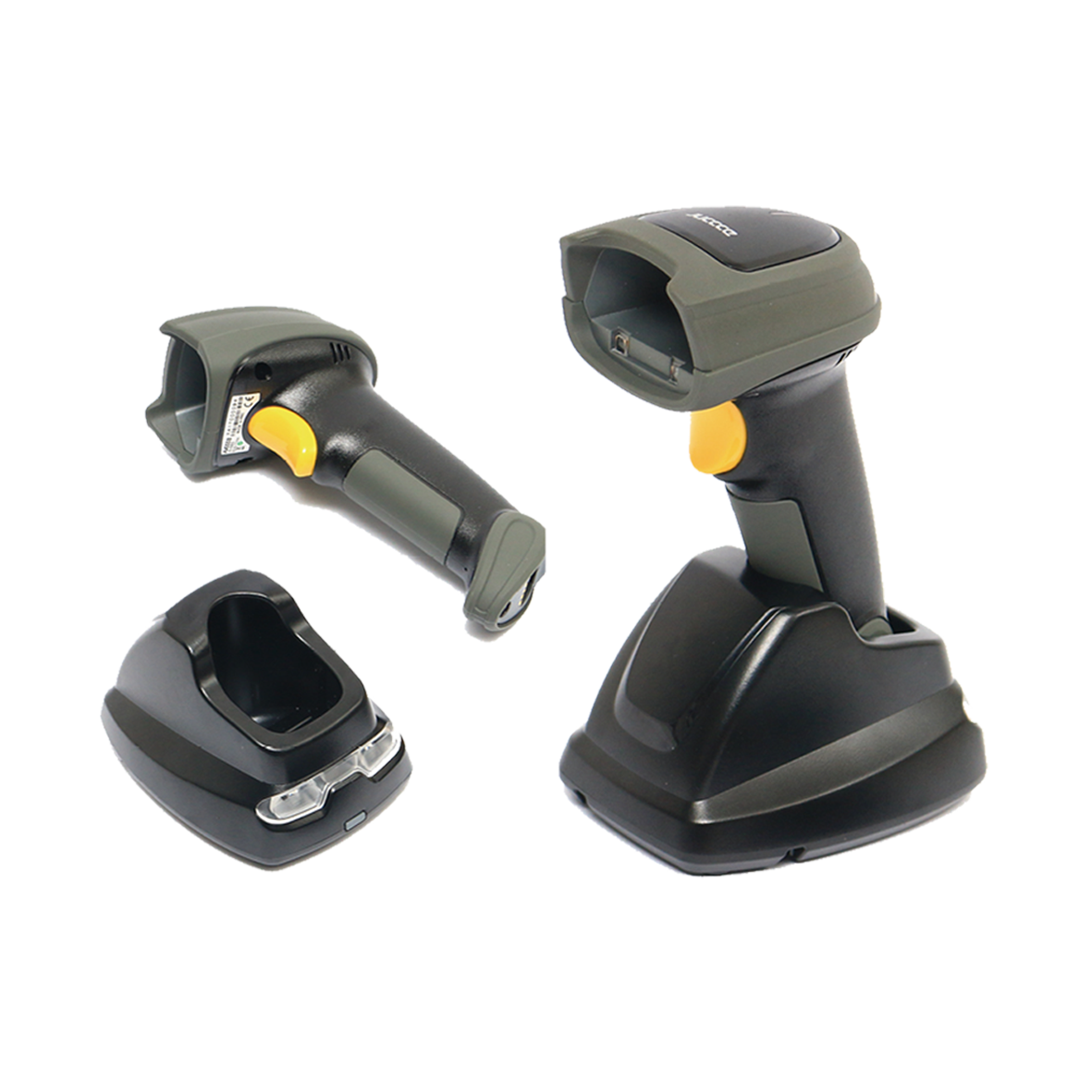
Why Manual Inventory Processes Fail — And How Barcode Technology Fixes Core Errors
The Human Error Baseline: Typing, Transcription, and Lookup Mistakes
Manual inventory management invites error at every keystroke. Workers misread SKUs, transpose digits (e.g., 1234 → 1243), or enter incorrect quantities. Studies show manual data entry carries an average error rate of 1 in 300 keystrokes, while barcode scanning reduces that to fewer than 1 in 1,000,000. Fatigue compounds the risk—repetitive typing over long shifts leads to missed items, incorrect lot numbers, and phantom stock. Transcription from paper logs or spreadsheets adds another layer of distortion: handwritten notes get misread or lost, and spreadsheet copy-paste errors propagate silently. Lookup mistakes further erode accuracy—grabbing a visually similar item, scanning the wrong location, or misidentifying packaging all create mismatches between physical goods and digital records. These small failures accumulate, widening the gap between actual and recorded stock—and directly undermining ordering precision, fulfillment reliability, and customer trust.
From 68% to 99.9% Accuracy: Measurable Gains with Barcode Scanning
Without automation, many warehouses operate with inventory accuracy as low as 68%, according to industry benchmarks. Barcode technology transforms that baseline by eliminating manual data entry entirely. A scanner reads the exact code in milliseconds, feeding precise item identifiers and quantities directly into the system. Companies adopting barcode scanning routinely achieve 99.9% inventory accuracy, with error rates dropping by 60% or more. This is not incremental improvement—it eliminates costly recounts, prevents mis-shipments, and stops discrepancies before they cascade. Real-time data capture ensures stock levels update instantly—not hours later—so systems can flag mismatches at the moment of scan. That shift—from reactive error chasing to proactive validation—builds a trustworthy inventory foundation, enabling confident decision-making across procurement, sales, and operations.
Barcode Technology in Action: Accuracy Gains Across Key Inventory Workflows
Barcode technology directly targets the most error-prone inventory tasks, transforming manual checks into fast, automated validations. By embedding scanning into daily workflows, operations achieve measurable accuracy gains that reduce costs and improve stock reliability.
Cycle Counting: Real-Time Validation and Instant Discrepancy Alerts
Cycle counting with barcode technology eliminates the lag and errors inherent in clipboard-based methods. Scanners capture each item’s data instantly, updating inventory records in real time and flagging mismatches immediately. Unlike manual counts—where transcription delays and human fatigue degrade accuracy from 68% downward—barcode-enabled cycle counting routinely exceeds 99.9% accuracy, per Logistics Management (2022). When a scan doesn’t match the expected quantity, the system alerts the operator on the spot, enabling rapid reconciliation and preventing mismatched records from entering the database. Companies report up to a 30% reduction in inventory discrepancies after adoption (Supply Chain Quarterly, 2023). Because every scan validates against expected stock levels, cycle counting evolves from a disruptive periodic audit into a continuous, accurate control mechanism.
Receiving & Shipping: Preventing SKU Misreceipts, Label Swaps, and Cross-Docking Errors
At receiving and shipping docks, barcode scanning serves as the first line of defense against high-cost errors. Scanning each incoming item against the purchase order verifies correct SKU, quantity, and lot number—reducing misreceipts from a typical 1 in 300 to as low as 1 in 10,000, according to the Warehousing Education and Research Council (WERC, 2023). A single misreceipt can trigger stockouts, excess inventory, financial write-offs, and supplier disputes. In shipping, barcode verification ensures the right label is matched to the right order—eliminating label swaps that cause returns, chargebacks, and reputational damage. For cross-docking operations—where goods move directly from inbound to outbound—scanning validates sort accuracy in real time, avoiding shipment delays and downstream reconciliation work. When a scan fails to match expectations, immediate alerts allow on-the-spot correction, keeping inventory records accurate from dock to dock.
Enabling Real-Time Inventory Visibility Through Barcode Integration
Barcode technology reshapes inventory visibility by replacing delayed, paper-based updates with immediate digital capture. The following two approaches show how to turn scanning into a real-time, unified view of stock.
Event-Driven Stock Updates vs. Batch Processing Delays
Traditional batch processing introduces hours—or even days—of latency between physical movement and system records. A barcode scan, by contrast, triggers an event-driven update the moment an item is received, moved, or shipped. This instant synchronization slashes the risk of overselling and reduces phantom stock. According to Aberdeen Group (2023), companies using real-time barcode capture saw a 30% reduction in stockouts and a 25% drop in excess inventory. Those gains stem from replacing periodic, error-prone manual counts with a continuous flow of verified data. Every scan becomes a transaction that refreshes availability—enabling faster replenishment decisions, accurate order promising, and tighter inventory turns.
Cloud WMS + Barcode Technology: Building a Single Source of Truth
Pairing barcode scanning with a cloud-based warehouse management system (WMS) creates a unified, always-current inventory record. Workers scan items using Wi-Fi- or cellular-connected handheld devices, and data flows seamlessly into a central platform accessible enterprise-wide. This eliminates data silos between receiving, picking, packing, and sales teams. A modern cloud WMS also enforces mandatory location and lot tracking, ensuring every scan updates the master record—without duplicate entries or version conflicts. The result is a single source of truth that supports cross-functional transparency and accountability. With real-time dashboards, automated alerts, and role-based visibility, teams detect and resolve discrepancies early—sustaining inventory accuracy above 99%, as confirmed by leading third-party logistics providers (2024).
Avoiding Common Barcode Technology Pitfalls That Undermine Accuracy
Even the most advanced barcode technology can fail if implementation pitfalls are overlooked. A label placed on a curved surface, near seams, or behind reflective packaging often causes persistent scan failures—reintroducing the very manual entry errors the system was designed to eliminate. Using the wrong symbology—such as relying on a 1D linear barcode where a 2D matrix (e.g., DataMatrix) is needed for dense or variable data—can render codes unreadable and stall inventory flow.
Environmental factors further erode reliability. Moisture, extreme temperatures, abrasion, or chemical exposure can degrade labels, causing misreads or no-reads that break traceability. Print quality issues—including low contrast, inadequate quiet zones, or insufficient resolution—silently compromise performance: a study by a leading label verification provider found that unchecked print quality can drop first-pass scan rates from 99.5% to below 90%. Routine verification using ANSI/ISO-compliant test equipment—paired with human-readable backup text—helps catch these issues before they impact counts. Proactive label design aligned with operational conditions, plus regular spot-checking, ensures barcode technology remains a source of accuracy—not a new vector for error.
FAQ
What is the average error rate for manual inventory data entry?
Manual inventory data entry has an average error rate of 1 in 300 keystrokes, whereas barcode technology reduces this to fewer than 1 in 1,000,000.
How does barcode technology improve inventory accuracy?
Barcode technology eliminates manual data entry by scanning item codes directly into inventory systems. This reduces error rates, updates stock levels in real time, and provides continuous control mechanisms.
Can barcode technology prevent errors during receiving and shipping?
Yes, barcode scanning verifies SKUs, quantities, and labels at receiving and shipping docks. This prevents misreceipts, label swaps, and cross-docking errors.
How does barcode technology enable real-time inventory visibility?
Barcode scans trigger immediate updates to inventory systems, replacing delayed batch processing. This real-time data enables faster replenishment decisions and reduces stockouts.
What are common pitfalls to avoid when implementing barcode technology?
Common pitfalls include poor label placement, using inappropriate symbologies, and environmental factors like moisture or erosion that can degrade labels. Regular inspection and ANSI/ISO-compliant routines can mitigate these issues.
Table of Contents
- Why Manual Inventory Processes Fail — And How Barcode Technology Fixes Core Errors
- Barcode Technology in Action: Accuracy Gains Across Key Inventory Workflows
- Enabling Real-Time Inventory Visibility Through Barcode Integration
- Avoiding Common Barcode Technology Pitfalls That Undermine Accuracy
-
FAQ
- What is the average error rate for manual inventory data entry?
- How does barcode technology improve inventory accuracy?
- Can barcode technology prevent errors during receiving and shipping?
- How does barcode technology enable real-time inventory visibility?
- What are common pitfalls to avoid when implementing barcode technology?