
 EN
EN
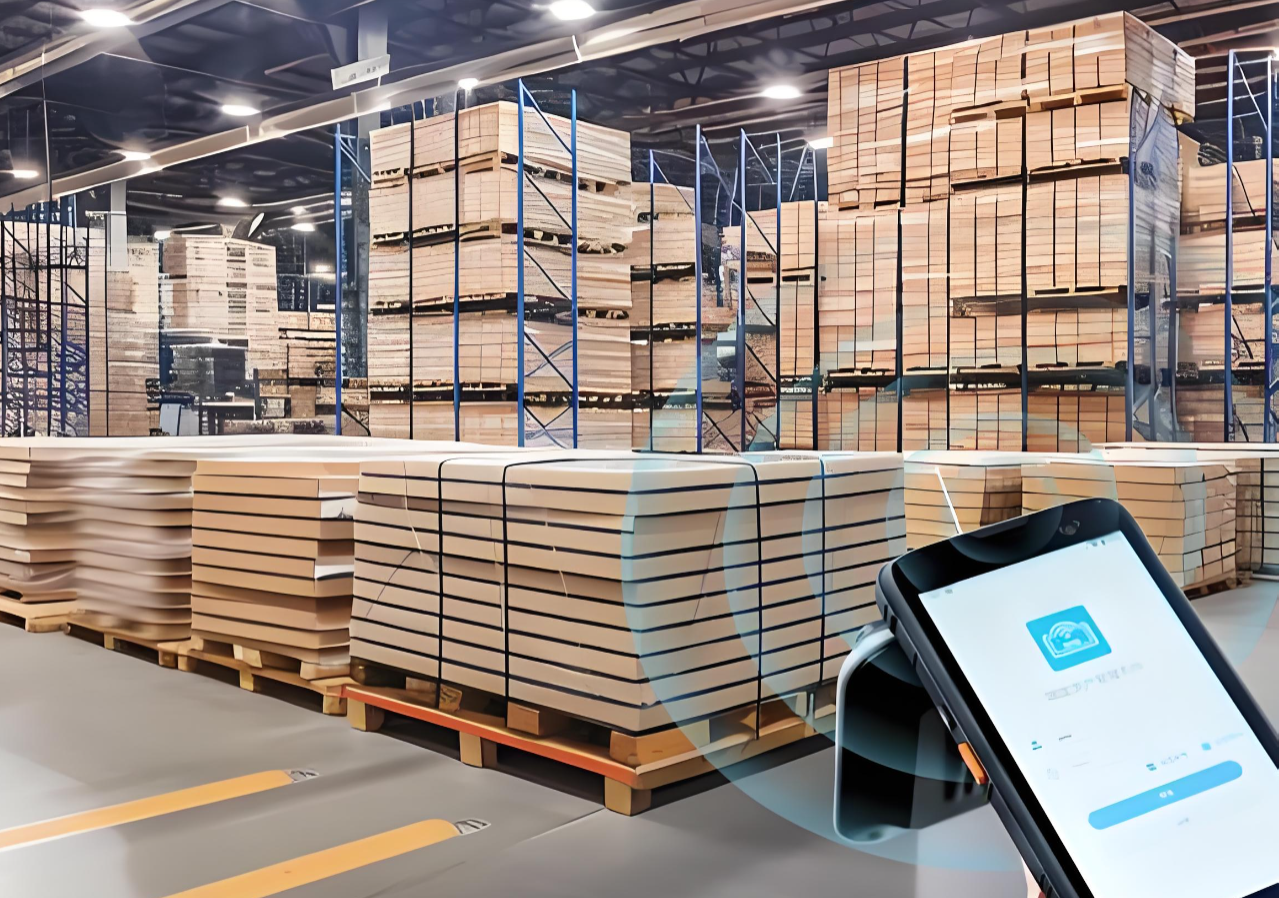
RFID Fundamentals: How It Solves Core Inventory Visibility Gaps
Accurate inventory records are the backbone of profitable retail operations, yet persistent gaps undermine this foundation. The following sections explore why traditional methods fall short and how physics‑based RFID technology closes the visibility loop.
The Inventory Visibility Crisis: Why 65% Inaccuracy Persists with Traditional Methods
Retailers relying on manual barcode scans or paper‑based counts face a systemic accuracy ceiling. Even with frequent cycle counts, inventory records average only 65% accuracy (IHL Group 2023). The root causes are structural: each scan requires line‑of‑sight and human attention, making batch processing slow and error‑prone. A single miscount or missed scan cascades into discrepancies that distort replenishment, hide shrinkage, and fuel stockouts. Omnichannel fulfillment—where a store must promise inventory to an online buyer while simultaneously serving in‑store customers—magnifies the damage. Without real‑time, trustworthy data, retailers cannot confidently allocate stock, leading to lost sales and eroded customer loyalty. The 65% benchmark is not just a number; it represents millions of dollars in misplaced inventory and missed revenue opportunities every quarter.
RFID Physics and Workflow: Contactless, Bulk Scanning for Real-Time Asset Tracking
RFID turns inventory counting into a continuous, touchless process. A typical system comprises three elements: a small tag (passive or active) attached to each item, a reader that emits radio waves, and middleware that integrates with the warehouse management system. When a tag enters the reader’s field, it harvests energy from the signal and transmits its unique identifier and stored data. Because radio waves pass through packaging and do not require line‑of‑sight, a single handheld or fixed reader can capture hundreds of tags per second—easily auditing an entire shelf in seconds. The data streams instantly to the WMS, updating stock levels and locations without human intervention. This bulk‑scanning capability eliminates the trade‑off between speed and accuracy. Workflows transform: receiving becomes a single pass through a portal, pick‑and‑pack verification is automated, and real‑time alerts flag missing items before they become lost sales. The result is a perpetual inventory that shrinks error rates to 0.1% or less, enabling retailers to finally trust their stock records.
RFID-Driven Inventory Accuracy: From 65% to 99.9% Record Reliability
The chasm between inventory records and physical stock is a primary source of retail inefficiency. Traditional methods—relying on manual counts and barcode scanning—generate errors by design. Research from Auburn University confirms these processes typically yield just 65% accuracy (Auburn University 2023), meaning over one-third of inventory data is unreliable. This undermines purchasing, merchandising, and sales decisions, resulting in excess safety stock, phantom inventory, and unpredictable service levels.
RFID re-engineers data capture at the physics level. Instead of line-of-sight, item-by-item scanning, an RFID reader captures unique digital identities from hundreds of tagged items within several meters—no human action required. This leap from laborious physical audit to automated digital reconciliation collapses the 35% inaccuracy gap. Empirical evidence shows retailers implementing RFID consistently achieve and sustain inventory accuracy rates of 99.9% or higher—a threshold unattainable with barcodes alone (GS1 US 2023). This near-perfect visibility transforms cycle counting from a quarterly or monthly event into a continuous, always-on process.
Preventing Revenue Leakage: RFID’s Role in Reducing Out-of-Stocks and Shrinkage
Quantifying Loss: $1 Trillion Annually Linked to Stockouts and Theft
Retailers lose more than $1 trillion each year to stockouts and inventory shrinkage. Out-of-stock items alone cause an estimated $984 billion in missed sales globally (IHL Group 2022). Meanwhile, theft, fraud, and administrative errors drive U.S. shrinkage costs to $100 billion annually (National Retail Federation 2023). These losses erode margins and damage customer loyalty. Manual inventory counts miss up to 65% of on-hand stock—leaving critical gaps that fuel both stockouts and undetected theft. Early adopters of RFID report a 16% reduction in stockout incidents, directly recovering millions in lost sales.
Real-Time Intervention: Automated Alerts and Anomaly Detection for Loss Prevention
RFID enables continuous, automated tracking of every tagged item across the store and supply chain. When inventory falls below a preset threshold, the system triggers replenishment alerts—preventing out-of-stocks before they occur. Simultaneously, RFID exit gates detect unpaid merchandise in real time and instantly alert security. Beyond theft prevention, analytics identify anomalous movement patterns—such as items moving outside standard stocking workflows—flagging internal theft or procedural errors. AI-driven systems analyze this data to predict shrinkage hotspots and optimize layouts. One retailer cut shrinkage by 55% within six months of deploying RFID-based loss prevention (Retail Systems Research 2023). This real-time intervention recovers revenue and reduces labor spent on manual audits—empowering staff to respond immediately to low stock or potential theft.
RFID vs. Barcode: Strategic Trade-offs for Retailers
When Barcodes Still Make Sense: Low-Cost Items, Legacy Systems, and Phased Adoption
Despite RFID’s advanced capabilities, barcodes remain a pragmatic choice for many retail operations. For low-cost, high-turnover items like grocery staples or fast fashion, the economics are clear: barcode labels cost fractions of a cent, while passive RFID tags—though falling in price—still represent a meaningful per-unit investment that can erode margins on low-value goods. This cost differential makes barcodes the standard for simple point-of-sale identification and compliance labeling. Furthermore, many retailers operate deeply entrenched legacy systems designed around barcode scanning. A full-scale infrastructure overhaul to support RFID readers and data processing is capital-intensive—not a simple software patch. A phased, hybrid adoption strategy often provides the most sensible path forward. This approach allows businesses to maintain barcode workflows for existing products while piloting RFID for high-value assets or loss prevention hotspots. By leveraging both technologies, retailers modernize strategically—gaining real-time visibility where it matters most without disrupting proven, cost-effective processes for everyday transactions.
FAQs: RFID and Inventory Management
What does RFID stand for?
RFID stands for Radio Frequency Identification, a technology used to identify and track tags attached to objects using radio waves.
How does RFID improve inventory accuracy?
RFID enables contactless, bulk scanning of tagged items, reducing human error and delivering real-time inventory updates with 99.9% accuracy.
Can RFID completely replace barcodes?
Not entirely. Barcodes remain cost-effective for low-value items and legacy systems, while RFID is better suited for high-value assets and real-time tracking needs.
Is RFID expensive to implement?
While RFID systems require higher upfront costs compared to barcodes, they offer substantial long-term savings by reducing errors, shrinkage, and stockouts.
What industries benefit most from RFID?
Retail, logistics, healthcare, and manufacturing are among the sectors that benefit significantly from RFID’s real-time tracking and data accuracy capabilities.
Table of Contents
- RFID Fundamentals: How It Solves Core Inventory Visibility Gaps
- RFID-Driven Inventory Accuracy: From 65% to 99.9% Record Reliability
- Preventing Revenue Leakage: RFID’s Role in Reducing Out-of-Stocks and Shrinkage
- RFID vs. Barcode: Strategic Trade-offs for Retailers
- FAQs: RFID and Inventory Management