
 EN
EN
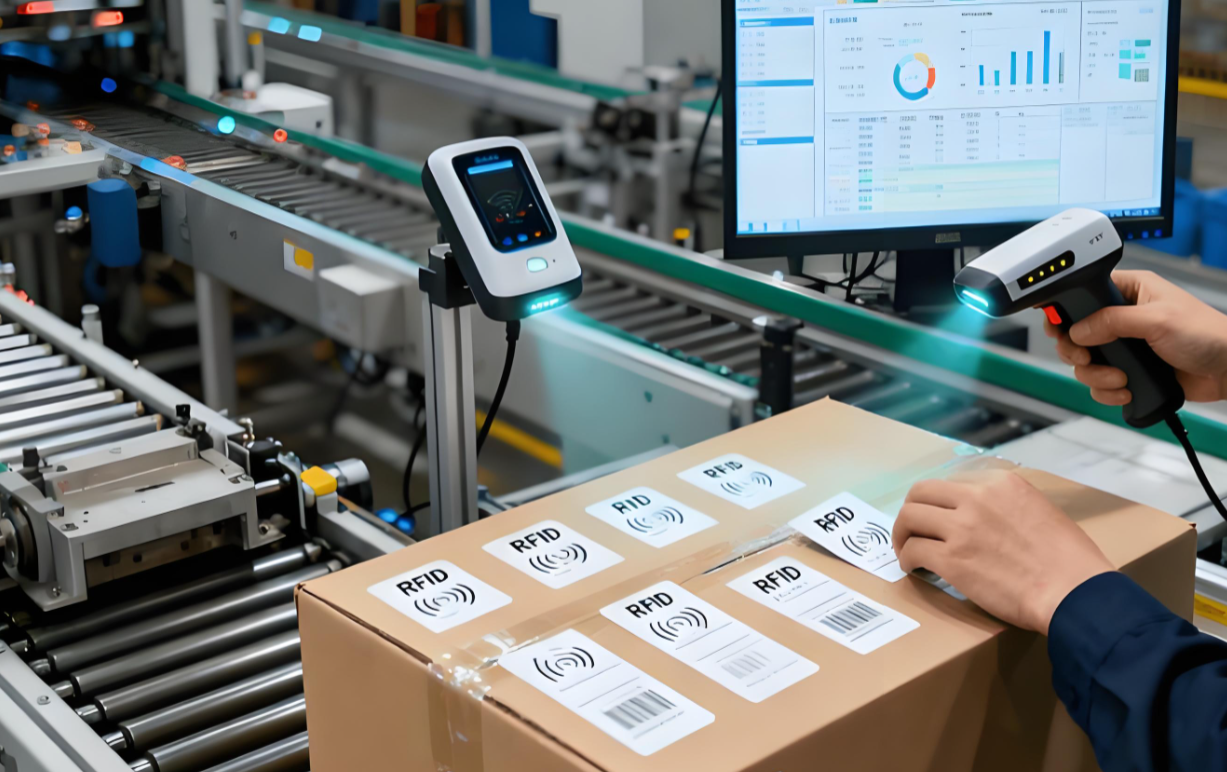
Understanding Global Frequency Regulations and Their Impact on RFID Label Design
When deploying RFID labels globally, adherence to regional frequency regulations is essential. A label approved in North America may be non‑compliant in Europe or Asia—risking supply chain delays, rejected shipments, or regulatory penalties. Selecting the right RFID label demands a clear grasp of how spectrum allocations and power limits shape chip, inlay, and antenna choices.
Why UHF RFID Spectrum Varies by Region (FCC, ETSI, SRRC, ARIB)
UHF RFID operates within the 860–960 MHz ISM band worldwide, but regional regulators assign distinct sub-bands to avoid interference with legacy services and national priorities. The US FCC permits 902–928 MHz; the EU’s ETSI standard centers on 865–868 MHz; China’s SRRC allocates 840–845 MHz and 920–925 MHz; and Japan’s ARIB defines 915–928 MHz (GS1, 2022). These variations stem from historical spectrum usage, military allocations, and differing radio policy frameworks.
Consequently, an RFID label chip must support multiple frequency tunings—or be designed for universal coverage—and its antenna must be precisely matched to the target region’s band edges. For example, an antenna optimized for 902–928 MHz will detune significantly at 865 MHz, causing severe read range loss. Regions like Europe also mandate Listen Before Talk (LBT), affecting tag response timing and requiring chips with fast wake-up and agile frequency-hopping capability. China’s dual-band requirement demands broad tuning headroom, while Japan’s upper band edge calls for refined inlay geometry. Channel spacing further differentiates regions: FCC mandates 500 kHz spacing, whereas ETSI uses 200 kHz—requiring chips with tighter frequency resolution and faster hopping agility.
How Band Edges and Power Limits Dictate Antenna and Chip Selection
Beyond frequency, regional power limits directly impact real-world performance. The FCC allows up to 4 W EIRP, while ETSI restricts transmit power to 2 W ERP—a 3 dB reduction that cuts theoretical read range by ~40%. To offset this, chips with higher receiver sensitivity (e.g., better than –20 dBm) become critical for European deployments. Antenna design must tightly align with regional band edges: even minor impedance mismatches cause efficiency loss, especially near spectral boundaries.
Narrower channel plans (e.g., ETSI’s 200 kHz vs. FCC’s 500 kHz) demand chips capable of precise frequency-hopping and rapid wake-up—features built into modern Gen2v2-compliant silicon. This interplay forces buyers to evaluate both the chip’s regulatory flexibility and the inlay’s radiation pattern. A high-gain compact antenna suitable for the FCC band may violate ETSI’s stricter spectral mask without redesign. Some wideband chips—like Impinj Monza and NXP UCODE—cover the full 860–960 MHz span, simplifying multi-region inventory management. Ultimately, selecting a compliant RFID label means verifying that test reports confirm performance at the relevant band edges, under applicable power limits and modulation schemes.
Selecting OEM RFID Labels with Compliant Chips and Inlays
Comparing Leading RFID Chips: Impinj Monza, NXP UCODE, Alien Higgs for Regulatory Flexibility
Global frequency compliance starts with the chip—the core of every RFID label. It must handle variable band edges, power constraints, and regional standards without sacrificing read reliability or speed. Three chip families dominate OEM deployments: Impinj Monza, NXP UCODE, and Alien Higgs—each offering distinct trade-offs in regulatory adaptability.
| Feature | Impinj Monza (e.g., M730/M750) | NXP UCODE (e.g., 8/9xe) | Alien Higgs (e.g., 9) |
|---|---|---|---|
| Frequency range | 840–960 MHz (worldwide) | 840–960 MHz (ETSI/FCC/SRRC) | 840–960 MHz (FCC/ETSI) |
| Key certifications | FCC, ETSI, SRRC, ARIB | FCC, ETSI, SRRC, MIC | FCC, ETSI, SRRC |
| Auto-tuning capability | Yes — dynamic antenna matching across bands | Yes — adaptive impedance adjustment | Limited — fixed tuning |
| Typical use | High-speed inventory, loss prevention, self-checkout | Supply chain logistics, item-level tracking | General retail, low‑cost tags |
Impinj’s chips incorporate automatic self-calibration to maintain sensitivity across the UHF spectrum—a key advantage when labels operate across FCC (902–928 MHz) and ETSI (865–868 MHz) zones. NXP’s UCODE 9xe excels in dense logistics environments thanks to its high read sensitivity and robust anti-collision, supporting seamless operation across multiple regulatory domains. Alien Higgs 9 offers cost-effective versatility for North American and European markets, though custom tuning is often required for full SRRC or ARIB alignment.
UHF vs. HF/NFC Inlays: Matching Protocol, Frequency, and Use Case Requirements
Choosing between UHF (860–960 MHz) and HF/NFC (13.56 MHz) inlays is fundamentally about protocol alignment—not just read distance. UHF inlays follow ISO 18000‑6C (EPC Gen2v2), enabling bulk reading at distances up to 12 meters—ideal for warehouse inventory, pallet tracking, and retail shelf scanning. HF/NFC inlays use ISO 14443 or ISO 15693 protocols, delivering secure one-to-one data exchange within 10 cm—making them ideal for access control, contactless payment, and pharmaceutical authentication.
The inlay’s antenna geometry further affects performance: larger UHF antennas increase range but struggle on small metal objects, where an HF inlay with a ferrite shield often delivers superior reliability. Material and mounting conditions matter too—metal, liquids, and dense packaging can detune UHF signals, shifting optimal frequency response and potentially violating regional spectral masks if not accounted for during inlay selection.
Customizing RFID Labels for Material, Form Factor, and Encoding Without Compromising Compliance
Customization is often necessary—but it must not undermine regulatory compliance. Material selection directly impacts environmental resilience and RF performance: for chemical washdown environments, polyimide film inlays with heat-resistant adhesives maintain integrity where standard PET labels fail. In outdoor or high-abrasion settings, UV-stabilized PET labels and ceramic housings extend operational life and reduce replacement costs.
Form factor adjustments are equally critical. Curved surfaces—such as pharmaceutical vials or cylindrical metal parts—require thin, flexible RFID labels that conform without peeling or air gaps. For metal assets, a foam or ferrite spacer layer between the inlay and surface prevents detuning—a common issue that can slash UHF read range by over 80% (RFID Journal, 2022). Crucially, such adaptations must preserve alignment with the intended frequency band: an FCC-tuned antenna design will underperform in ETSI regions and may breach power density limits due to unintended spectral leakage.
Encoding practices also require precision. Custom data formats—like SGTIN-96 for retail serialization or user memory for batch/lot numbers—must be written error-free. Using GS1-compliant EPC structures ensures interoperability with global supply chain systems and avoids shipment rejection. A trusted RFID label provider validates that the encoded chip—whether Impinj Monza, NXP UCODE, or Alien Higgs—matches the regional frequency profile and modulation scheme after antenna tuning and material integration. Finally, stress-testing the finished label for read range, backscatter consistency, and durability under real-world conditions confirms that customization hasn’t compromised regulatory compliance or functional performance.
Frequently Asked Questions (FAQs)
Why do UHF RFID frequency bands vary by region?
UHF RFID frequency bands differ by region due to historical spectrum usage, military allocations, and distinct national radio policy frameworks that aim to avoid interference with other services.
How do regional power limits affect RFID label performance?
Power limits, such as 4 W EIRP in FCC regions and 2 W ERP in ETSI regions, significantly impact read range. Labels in regions with lower power limits need chips with higher receiver sensitivity to maintain performance.
What is the difference between UHF and HF/NFC RFID inlays?
UHF RFID inlays are ideal for bulk reading over long distances (up to 12 meters), while HF/NFC inlays support secure, one-to-one communication within a short range (up to 10 cm).
What factors should I consider when customizing RFID labels?
Consider environmental resilience, material, form factor, and encoding precision while ensuring compliance with regional frequency and power regulations to maintain RF performance.
Which RFID chips are best for multi-region deployment?
Chips like Impinj Monza and NXP UCODE are preferred for their regulatory adaptability and wide frequency tuning, while Alien Higgs is a cost-efficient choice for specific regional needs.