
 EN
EN
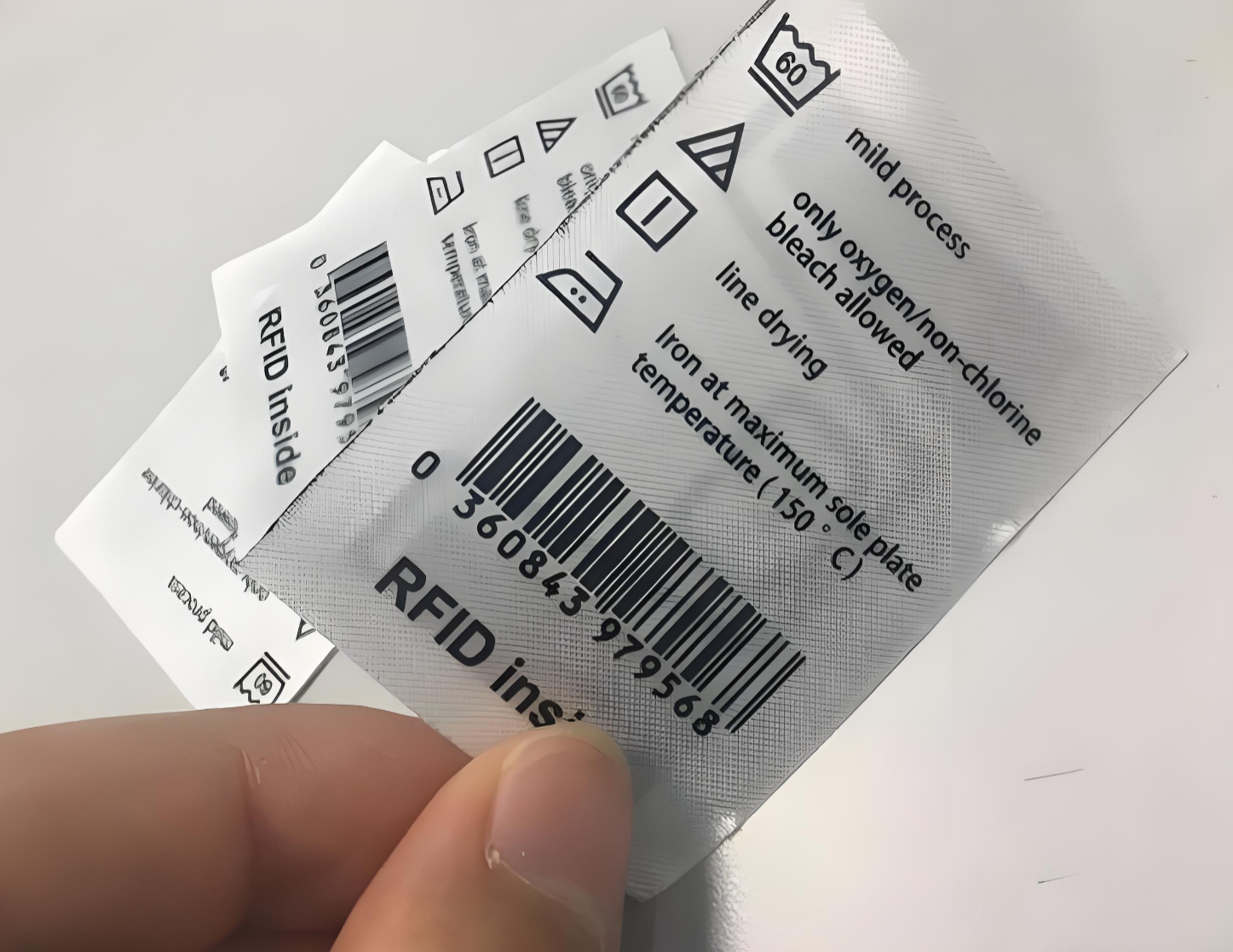
The Strategic Value of Combined Barcode and RFID Encoding on a Single RFID Label
In modern logistics, a single RFID label that carries both a barcode and an RAIN RFID inlay bridges the gap between visual scanning and hands‑free data capture. This hybrid approach eliminates the need to maintain separate labeling tracks and empowers workers to use whichever read method suits the moment — a fast RFID bulk scan at a dock door or a quick barcode glance on a shelf.
Dual-Read Efficiency: How Hybrid Encoding Reduces Labor, Errors, and System Fragmentation
Conventional workflows often treat barcode and RFID as isolated systems: a pallet receives a barcode label for receiving and an RFID tag for inventory tracking, creating dual‑entry tasks and doubling the chance of mismatch. By fusing both identifiers onto one printable RFID label, a single scan action can populate both systems simultaneously. Warehouse operatives no longer need to align two data sets; RFID captures the tag ID automatically while the visible barcode serves as a foolproof backup for spot checks. A 2023 field study observed that this dual‑read model cut item check‑in times by 42% and misplacement errors by 27% (Material Handling Institute, 2023). Labor hours drop because operators scan an entire pallet in seconds rather than handling each box individually, and IT overhead shrinks because one label feeds one unified data stream. The result is a resilient identification layer that keeps operations running smoothly—even if a reader temporarily fails or a barcode becomes soiled.
ROI Validation: Automotive Tier-1 Case Study — 92% Fewer Scan Failures with Unified RFID Label Deployment
A leading automotive tier‑1 supplier replaced 1.2 million barcode‑only labels with custom printable RFID labels on reusable parts totes. Before the switch, scan failure rates at receiving bays averaged 11.4 per 1,000 reads—largely due to damaged barcodes and line‑of‑sight constraints. Within six months of deploying hybrid labels, scan failures plummeted to 0.9 per 1,000—a 92% reduction. The RFID label’s UHF inlay enabled hands‑free, bulk scanning of incoming shipments, while the high‑contrast barcode ensured immediate visual traceability for line‑side operators. No hardware replacement was needed on the shop floor; existing barcode scanners and newly installed ceiling‑mounted RFID readers worked in concert. The consolidation removed 3,200 hours of manual re‑scanning per year and eliminated $180k in chargeback penalties for delayed inventory receipts. Overall, the project reached payback in 14 months, delivering annual savings of $740k and a five‑year net present value exceeding $2.1M (Internal Performance Audit, 2024).
Printable RFID Label Design: Balancing High-Fidelity Human-Readable Printing with UHF/NFC Performance
A successful hybrid RFID label fuses high-resolution visual identification with robust radio-frequency performance—but every printing method introduces physical and electrical stresses that can compromise the embedded antenna. The design must therefore ensure surface engineering adapts to the chosen print technology while strictly preserving UHF and NFC read characteristics.
Surface Engineering for Multi-Technology Compatibility: Thermal, Inkjet, and Laser Printability Without Antenna Degradation
The RFID label’s face stock functions as both a print medium and an RF-transparent window. Thermal transfer printing applies heat through a ribbon, demanding a top-coated surface that resists scorching yet releases ink cleanly; if the coating is too thick, it can insulate the antenna and reduce coupling. Inkjet compatibility requires micro‑porous or swellable coatings that quickly absorb liquid ink without lateral bleeding that might short‑circuit delicate antenna traces. Laser printing relies on toner fused by a heated fuser roller, so the label must withstand temperatures up to 200 °C without delamination or warping of the PET or polypropylene carrier. In all cases, the conductive aluminum, copper, or silver antenna must be sealed beneath an insulating layer that prevents ink chemicals from corroding the metal over time. Manufacturers often use a protective over‑laminate or a barrier adhesive that doubles as a dielectric, isolating the antenna from the print surface. The challenge intensifies with UHF labels, which feature a far‑field dipole more sensitive to nearby dielectrics; even a subtle shift in the antenna’s impedance environment—caused by a thick ink layer—can shift the resonant frequency by 10–20 MHz, pushing the label out of optimum performance bands. Thus, material stacks are engineered to keep the ink layer’s thickness below 10 µm and its dielectric constant under 3, ensuring printing does not detune the tag.
Critical Tradeoff Analysis: Maintaining EPC Gen2 Read Range and Encoding Reliability After High-Resolution Printing
High‑resolution graphics on an RFID label can inadvertently degrade UHF performance. The primary risk is dielectric loading: a densely inked area sitting directly over the antenna loop acts as a parasitic capacitor, altering the antenna’s reactance and narrowing its bandwidth. Empirical tests show that a full‑coverage black ink layer can reduce an EPC Gen2 tag’s read range by 20–30%, especially in the 902–928 MHz band (2023 industry benchmarks). Another failure mode is elevated RF noise during encoding; thermal printheads generate electrostatic discharge and heat that can corrupt the chip’s initial programming if the label is encoded inline. To counteract these effects, design rules often reserve a “keep‑out zone” around the antenna’s feed point where no printing is allowed, and encoding is deferred until after the label has cooled. A leading manufacturer reports that using a low‑dielectric UV‑curable ink—combined with precise print registration—holds the frequency shift under 2 MHz and restores read range to within 5% of an unprinted tag. The tradeoff then becomes print resolution: the smoother and more uniform the ink layer, the less it disturbs the RF field. Consequently, thermal transfer ribbons with a high‑resolution wax‑resin formulation are favored over heavy pigment inks, even though they may produce slightly less vivid graphics. Ultimately, every printable RFID label must be validated in its final printed state, measuring sensitivity and backscatter strength across the intended frequency range to guarantee reliable dual‑read performance in real-world conditions.
Custom RFID Label Encoding: Synchronizing Branding, Barcodes, and RFID Data in One Workflow
Beyond Serials: Embedding QR Codes, Logos, and Traceability Metadata Directly into the RFID Label’s Memory Map
Modern RFID label encoding moves far beyond simple serial numbers. The tag’s integrated circuit (IC) can store structured data beyond a basic Electronic Product Code (EPC), including GS1 Application Identifiers for batch numbers, expiration dates, and URL pointers to digital assets. This creates a single, dynamic record on each item. For example, encoding a URL in the tag’s user memory allows a scanned RFID label to serve up a product’s complete digital passport—not just a 96-bit identifier. High-memory UHF chips now accommodate complex metadata structures alongside traditional barcode data, ensuring both a 1D barcode’s visual scan and an NFC tap retrieve the same authoritative source of truth from one physical label.
Compliance Safeguards: Auditing Custom Encoding Against GS1 EPCglobal Standards to Avoid Interoperability Risk
Custom data formatting introduces significant supply chain risk if it deviates from ratified standards. A 2023 interoperability study found that non-standard EPC encoding was the root cause of 1 in 5 RFID read rejections at retail receiving docks. A thorough audit process must verify that the tag’s memory bank layout—particularly the Serialized Global Trade Item Number (SGTIN) structure—aligns precisely with the GS1 Tag Data Standard (TDS) v2.0. This includes confirming correct header bits, filter values, and partition logic. A non-compliant RFID label might read perfectly in a closed-loop warehouse but fail entirely at a trading partner’s portal, turning a traceability asset into a liability.
Selecting the Optimal RFID Label Platform for Hybrid Encoding Applications
Choosing the right RFID label platform for hybrid barcode‑RFID applications demands a detailed evaluation of inlay format, material substrate, and encoding workflow compatibility. The operating frequency—UHF for dockside scanning across meters, HF or NFC for item‑level verification near a reader—must match read‑range needs and system architecture. Substrate selection is equally critical: paper‑based labels suit dry, low‑stress environments, while synthetic or polyester stocks withstand moisture, chemicals, and extreme temperatures; metal‑mount variants solve read‑on‑metal challenges without compromising signal integrity. Memory architecture must accommodate both the unique barcode data and supplementary RFID metadata without degrading encoding speed or EPC Gen2 compliance. Workflow integration forms another pillar—the label must pass through a printer‑encoder that simultaneously imparts a high‑resolution barcode and a verified RFID serial number without antenna damage. Forward‑thinking teams also test read‑range retention after printing and cross‑validate barcode scan rates with RFID capture accuracy. By mapping these factors to asset type, operational environment, and data‑sharing needs, organizations narrow their selection to a platform that delivers reliable dual‑read capability, reduces system fragmentation, and future‑proofs traceability investments.
FAQ
What is a hybrid RFID label?
A hybrid RFID label combines a barcode and an RFID inlay, allowing for both visual barcode scanning and hands-free data capture via RFID technology in one label.
How does a hybrid RFID label improve efficiency?
Hybrid RFID labels streamline operations by allowing simultaneous barcode scanning and RFID data capture in a single action. They reduce manual labor, lower error rates, and eliminate the need for dual-entry tasks.
What kind of printing technologies are used for RFID labels?
RFID labels can be printed using thermal transfer, inkjet, or laser printing. The choice of technology often depends on the specific use case and environmental conditions.
How can printing affect an RFID label's performance?
Printing can affect the RFID label's performance due to factors such as dielectric loading and RF noise from printing and encoding processes. Proper design and material selection can mitigate these issues.
What standards are important for RFID label encoding?
EPC Gen2 and GS1 EPCglobal standards are crucial for ensuring the interoperability of RFID labels across different supply chains. Labels should be verified to adhere to these standards to prevent read failures or data inaccuracies.
Table of Contents
- The Strategic Value of Combined Barcode and RFID Encoding on a Single RFID Label
- Printable RFID Label Design: Balancing High-Fidelity Human-Readable Printing with UHF/NFC Performance
- Custom RFID Label Encoding: Synchronizing Branding, Barcodes, and RFID Data in One Workflow
- Selecting the Optimal RFID Label Platform for Hybrid Encoding Applications
- FAQ