
 EN
EN
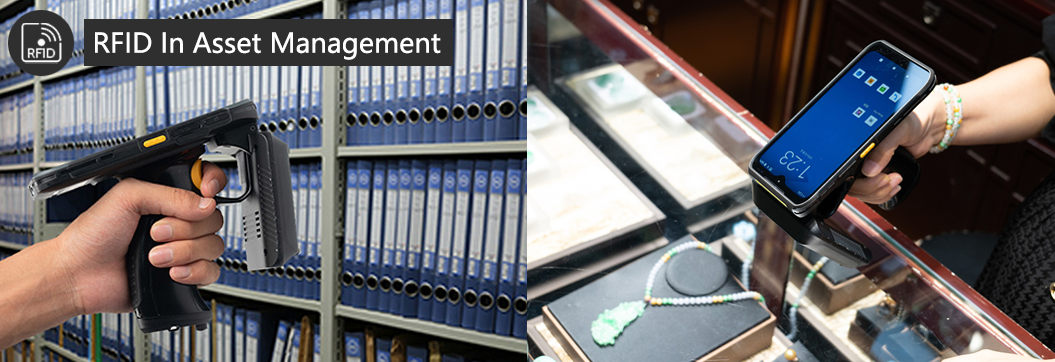
RFID Fundamentals: How RFID Enables Contactless Asset Identification
Electromagnetic Coupling and Non-Contact Data Transmission
RFID (Radio Frequency Identification) enables contactless asset tracking through electromagnetic coupling. When an RFID reader emits radio waves, nearby passive tags harvest energy from this field via their antennas—powering the microchip without batteries. The chip then modulates the reflected signal to transmit encoded data back to the reader, all without physical contact or line-of-sight. This method supports simultaneous scanning of dozens of assets—even through cardboard, plastic, or fabric—making it uniquely suited for high-volume, dynamic environments like distribution centers and hospital supply rooms. Unlike barcodes, RFID eliminates manual scanning bottlenecks while sustaining accuracy in dust, moisture, or low-light conditions.
Core Components: Tags, Readers, Antennas, and Middleware
A functional RFID system integrates four interdependent components:
- Tags: Passive or active devices containing a microchip and antenna; encode unique identifiers and metadata directly onto the asset
- Readers: Interrogation devices that emit RF energy and decode returning signals
- Antennas: Tune and extend read range and directionality between readers and tags
- Middleware: Software layer that filters noise, resolves duplicate reads, and standardizes data for ERP, CMMS, or cloud-based asset management systems
This architecture converts raw radio signals into operational intelligence. For instance, dock-door readers automatically log tagged pallets entering or exiting a warehouse, while middleware translates those events into real-time inventory updates—reducing manual reconciliation efforts by up to 90%, per peer-reviewed supply chain efficiency studies published in the International Journal of Logistics Management.
RFID Asset Tracking Workflow: From Tagging to Actionable Insights
Tagging Strategy: Encoding, Placement, and Environmental Optimization
Effective RFID implementation begins with purposeful tag selection and deployment. Choose tag types based on material composition and environmental stressors: passive UHF tags suit dry, non-metallic pallets, while on-metal or high-temperature variants are essential for machinery or outdoor equipment. During encoding, embed not only unique IDs but also actionable metadata—such as calibration dates, service history, or compliance status—directly into the tag’s memory. Placement must account for physics: mount tags on flat, non-conductive surfaces, orient antennas toward expected reader positions, and avoid metal shielding or liquid proximity. Environmental tuning—like adjusting reader power or deploying anti-collision protocols—further stabilizes performance in dense or interference-prone zones. A global logistics provider reduced misreads by 73% after repositioning tags at 45° angles on aluminum shipping containers, confirming that empirical calibration—not just specification adherence—drives reliability.
Data Flow: Signal Capture, Cloud Integration, and Real-Time Dashboarding
As tagged assets pass through reader zones, antennas capture modulated signals via electromagnetic coupling. Readers perform on-device validation—filtering duplicates, verifying CRC checksums, and discarding low-SNR transmissions—before forwarding encrypted payloads to cloud platforms via secure RESTful APIs. Middleware normalizes the data stream, reconciling timestamps, geolocating events using zone-mapped readers, and enriching records with contextual metadata from integrated systems. Cloud analytics engines then correlate movement patterns with maintenance logs, utilization thresholds, or facility maps—populating real-time dashboards used by operations teams. One regional hospital network cut average medical equipment retrieval time by 40% by fusing RFID choke-point data with room-level Bluetooth beacons, illustrating how layered, interoperable data flows enable mission-critical responsiveness.
Passive vs Active RFID: Choosing the Right RFID Solution for Your Assets
Power, Range, Cost, and Lifespan Trade-offs in RFID Systems
Passive RFID tags draw power solely from reader-emitted RF fields, enabling reliable short-to-medium range detection (typically 3–20 feet) without batteries. Their simplicity delivers ultra-low unit costs ($0.10–$1.00) and indefinite operational lifespans—ideal for disposable or high-turnover applications like retail apparel or pharmaceutical packaging. Active RFID tags integrate onboard batteries, supporting extended ranges (100–300+ feet) and sensor capabilities (e.g., temperature, shock, battery level), but at higher cost ($15–$100+) and finite lifespans (3–5 years). As outlined in the ISO/IEC 18000 series standards, these trade-offs are not technical limitations but intentional design choices aligned with use-case requirements: passive systems dominate cost-sensitive, high-density scenarios like warehouse pallet tracking, while active solutions justify premium investment where continuous location fidelity is non-negotiable—such as enterprise-wide medical device tracking.
Use Case Alignment: Choke Point Monitoring vs Real-Time Locating Systems (RTLS)
Passive RFID excels in choke point monitoring: capturing asset presence at discrete, high-traffic locations—doorways, dock gates, tool cribs—where precise timing and cost efficiency outweigh continuous positioning needs. Active RFID underpins Real-Time Locating Systems (RTLS), delivering sub-10-foot location accuracy across expansive areas without infrastructure gaps. In practice, hybrid deployments often deliver optimal ROI: a Tier-1 automotive manufacturer uses passive UHF tags for inbound parts verification at receiving docks, while deploying active tags on robotic welding arms to feed predictive maintenance models via integrated SCADA systems. The decisive factor is operational intent—intermittent verification versus persistent spatial awareness—and whether the business case hinges on what moved or exactly where it is now.
Key Advantages of RFID in Modern Asset Tracking Operations
RFID transforms asset-intensive operations by replacing error-prone manual processes with deterministic, automated identification. Industry benchmarks—including longitudinal studies cited by Gartner and the Council of Supply Chain Management Professionals (CSCMP)—confirm organizations achieve ≥99.9% inventory accuracy and reduce asset loss by 25–30% through consistent, contactless visibility. Core advantages include:
- Non-line-of-sight efficiency: Scan hundreds of tagged assets simultaneously—even when obscured by packaging, stacked pallets, or ambient clutter—accelerating cycle counts by up to 90% versus barcode-based audits
- Real-time traceability: Capture asset movements across facilities with timestamped, zone-specific event logging—enabling full chain-of-custody reporting
- Labor optimization: Cut manual counting hours by 70% while maintaining audit readiness and regulatory compliance (e.g., FDA 21 CFR Part 11, ISO 55001)
- Theft and misuse prevention: Trigger instant geofence alerts for unauthorized movement outside designated zones or operating hours
- Data-driven decision support: Feed movement analytics into AI-powered platforms to forecast maintenance windows, rebalance fleet utilization, or model capacity constraints
Collectively, these capabilities help organizations recover 15–20% of previously stranded operational capacity and reduce annual audit costs by up to 40%, establishing RFID as foundational infrastructure—not just a tracking tool—for resilient, insight-led asset management.
FAQ Section
What is RFID?
RFID stands for Radio Frequency Identification, a technology used for contactless asset tracking by using electromagnetic fields.
How does RFID work?
RFID works by RFID readers emitting radio waves, which nearby passive tags use to harvest energy. The tags then send encoded data back to the reader without physical contact.
What are passive and active RFID tags?
Passive RFID tags have no batteries and rely on readers for power, making them cost-effective. Active RFID tags have batteries, support extended range, and offer additional sensor capabilities.
Where is RFID commonly used?
RFID is commonly used in distribution centers, hospital supply rooms, warehouse pallet tracking, enterprise-wide medical device tracking, and more.
What are the advantages of RFID?
RFID offers advantages like non-line-of-sight efficiency, real-time traceability, labor optimization, theft prevention, and data-driven decision support.