
 EN
EN
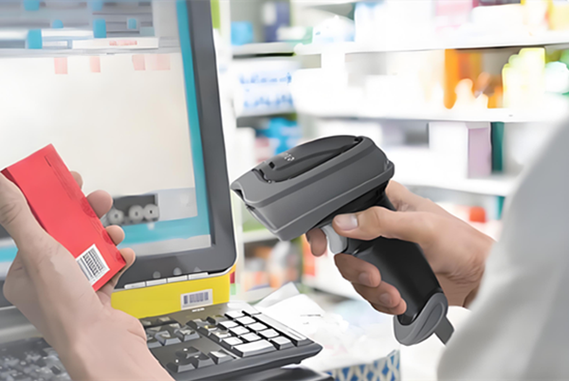
The Birth and Standardization of Retail Barcodes
From Concept to Checkout: The 1974 UPC Debut at Marsh Supermarkets
The foundation of modern retail automation was laid in 1949, when graduate students Norman Woodland and Bernard Silver developed the first barcode concept to solve manual pricing inefficiencies. After years of refinement—including IBM’s pivotal role in designing the laser-scannable UPC format—the grocery industry formally adopted the Universal Product Code (UPC) in 1973. A landmark demonstration followed on June 26, 1974, at a Marsh supermarket in Troy, Ohio, where a pack of Wrigley’s Juicy Fruit gum became the first item scanned at checkout using a laser scanner. This moment validated barcodes as a practical, scalable solution—replacing error-prone manual entry with light-detectable patterns that enabled instant, reliable product identification.
Standardization Through GS1: Enabling Global Barcode Interoperability
Following the UPC’s U.S. rollout, competing regional systems threatened global supply chain coherence. In response, industry stakeholders formed GS1—a neutral, not-for-profit standards organization—to unify barcode governance worldwide. GS1 established mandatory specifications for numbering structures, data encoding, symbology (like UPC-A and EAN-13), and scanning protocols. Its system assigns unique manufacturer prefixes and product identifiers, ensuring every item carries a globally distinct code. This standardization allows retailers, distributors, and suppliers across borders to share consistent product data—seamlessly integrating physical goods with digital systems like ERP, WMS, and POS platforms.
Barcode-Driven Efficiency Gains in Checkout and Inventory Control
Error Reduction: 99.9% Scan Accuracy Versus Manual Keying
Manual data entry at checkout historically introduced frequent errors—miskeyed prices, incorrect SKUs, and mismatched inventory updates—that eroded margin and trust. Barcode scanning eliminates this vulnerability by automating identification, delivering 99.9% scan accuracy under typical conditions. This precision directly strengthens operational integrity: pricing remains consistent, stock records reflect actual movements, and discrepancies between physical counts and digital ledgers shrink dramatically—reducing costly overordering, stockouts, and customer dissatisfaction.
Speed Optimization: 40–60% Faster Transactions with Barcode Scanning
Barcode scanning accelerates checkout velocity by 40–60% compared to manual keying. Each scan retrieves full product details—including price, description, and tax rules—in milliseconds, eliminating seconds-long lookups or keystrokes per item. The cumulative effect is shorter lines, higher peak-hour throughput, and staff time freed for higher-value tasks like restocking or personalized service. Critically, every scan also triggers real-time inventory updates in the POS and backend systems—enabling dynamic replenishment alerts and reducing revenue loss from empty shelves.
Real-Time Data Flow Enabled by Barcode Integration
Synchronizing POS, ERP, and Warehouse Systems via Barcode Feeds
Barcode integration establishes a continuous, automated data pipeline linking point-of-sale (POS), enterprise resource planning (ERP), and warehouse management systems (WMS). With each scan, product, quantity, time, and location data flow instantly across platforms—bypassing manual re-entry, transcription delays, and associated errors. This real-time synchronization enables immediate visibility into inventory movement—from shelf to checkout to backroom—and ensures shelf-level stock counts update in lockstep with sales. Demand forecasting, transfer orders, and restocking alerts are then triggered algorithmically, maintaining optimal inventory levels while closing the gap between physical stock and digital records.
Tangible Business Impact: Shrinkage Reduction and Stock Accuracy
25–35% Decline in Unexplained Inventory Loss After Barcode Adoption
Barcode adoption delivers one of retail’s most measurable ROI impacts: a 25–35% reduction in unexplained inventory loss—commonly known as shrinkage—within the first year. In 2024, U.S. retailers lost an estimated $94 billion to shrinkage, driven largely by theft, administrative errors, and misplacements. Barcodes counteract this by creating immutable digital audit trails for every item movement—whether received, sold, transferred, or adjusted. When POS scans automatically update centralized inventory databases, discrepancies surface instantly, enabling rapid investigation and correction. The result is tighter control over stock accuracy, fewer missed sales from out-of-stocks, and recovered margin previously absorbed by hidden shrinkage.
FAQ
What is the origin of retail barcodes?
Barcodes were first conceptualized in 1949 by Norman Woodland and Bernard Silver to address inefficiencies in manual pricing. The Universal Product Code (UPC) debuted in 1974, marking the beginning of retail barcode use.
What is GS1, and why is it important?
GS1 is a global, not-for-profit standards organization that governs barcodes around the world. It ensures unique, standardized codes for every product, enabling seamless global supply chain interoperability.
How do barcodes improve retail efficiency?
Barcodes enhance efficiency by reducing checkout errors, speeding up transactions by as much as 60%, and automating real-time inventory updates, minimizing manual intervention.
What is the business impact of adopting barcodes in retail?
Adopting barcodes can reduce unexplained inventory losses by 25–35%, improve stock accuracy, and streamline operations through real-time data synchronization.
How do barcodes integrate with modern enterprise systems?
Barcodes link point-of-sale systems with ERP and warehouse management systems, automating data flows to ensure accurate stock counts, demand forecasting, and replenishment alerts.