
 EN
EN
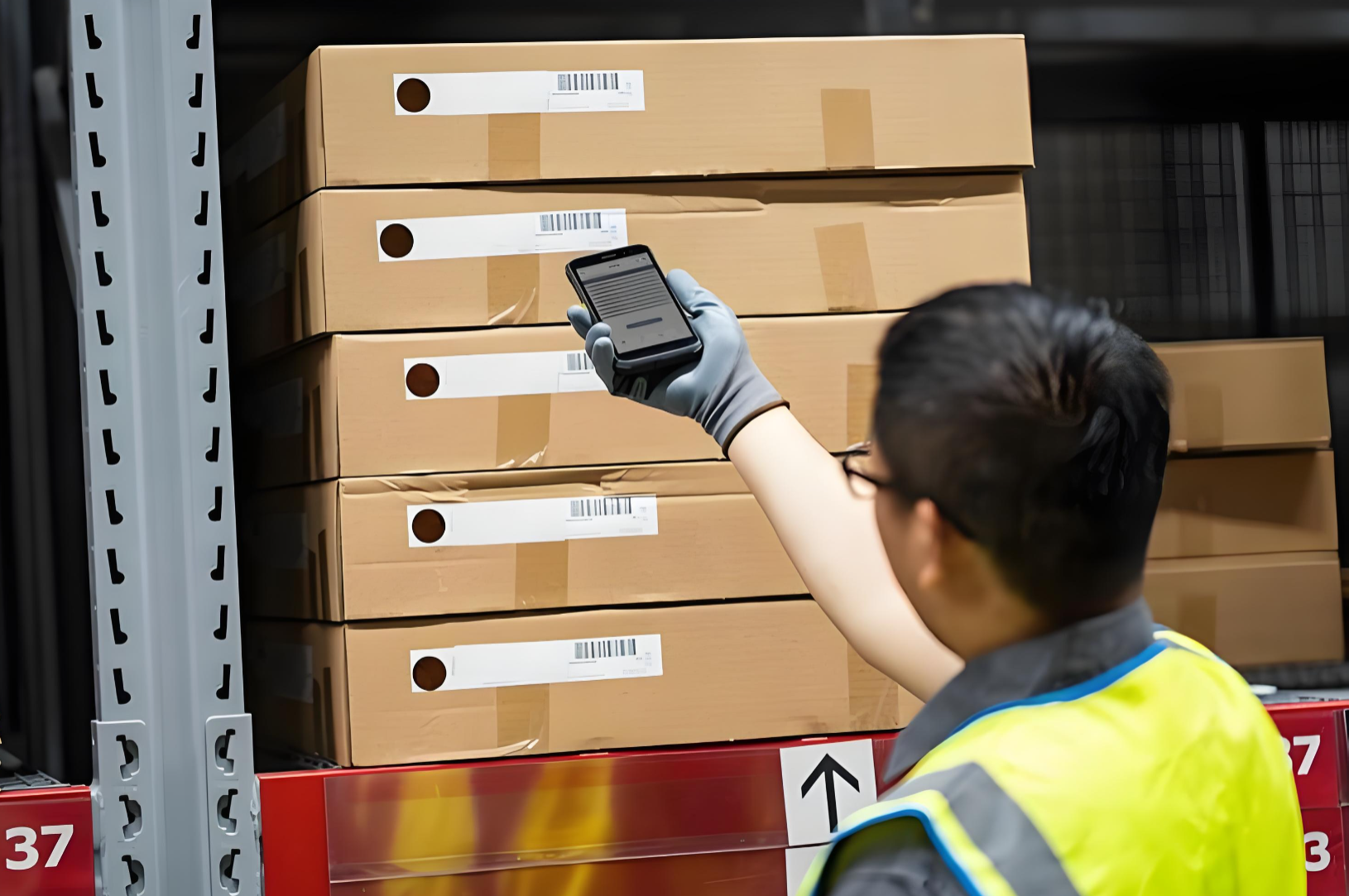
Real-Time Inventory Visibility with Handheld PDA Integration
Eliminating stock discrepancies through instant PDA-to-WMS synchronization
Handheld PDA devices eliminate stock discrepancies by enabling true real-time synchronization between warehouse operations and Warehouse Management Systems (WMS). When staff scan items using industrial-grade PDAs, inventory records update instantly across the entire system—removing the lag and inaccuracies inherent in manual data entry. For example, during receiving, workers verify quantities against purchase orders directly on the device; mismatches trigger immediate alerts, enabling correction before errors propagate into fulfillment failures or stockouts. Because every scan updates the central WMS database in real time, financial reporting, demand forecasting, and replenishment logic all operate from a single source of truth. This closed-loop process reduces inventory write-offs and supports perpetual accuracy—no batch processing required.
How Android-based PDA devices enable seamless cloud and on-premise WMS connectivity
Modern Android-based PDAs deliver flexible, secure integration with both cloud-hosted and on-premise WMS platforms. Their open architecture supports standardized APIs, bridging legacy infrastructure and modern cloud environments—including AWS and Azure—without costly middleware. Workers can initiate stock transfers via PDA scans in the aisle, with data routing seamlessly to corporate servers or cloud repositories. During temporary network outages, encrypted local caching ensures zero data loss, with automatic sync upon reconnection. Real-time SKU validation occurs directly on-device—even offline—cross-referencing cached WMS data to prevent mis-shipments and maintain accuracy regardless of connectivity.
Barcode Scanning Precision: Why PDA Devices Cut Inventory Errors by >99%
Comparing manual entry (6.5% error rate) vs. PDA barcode scanning (<0.01%)
Manual data entry introduces systemic risk: industry studies consistently report an average 6.5% error rate—65 mistakes per 1,000 entries. In contrast, PDA barcode scanning reduces misidentification to under 0.01%, delivering over 99.9% accuracy. This leap in precision comes from eliminating keystrokes entirely: a single scan captures SKU, quantity, and location with deterministic reliability.
Real-time SKU validation and auto-correction powered by embedded PDA software
Embedded PDA software turns each scan into a proactive control point. As barcodes register, on-device algorithms instantly validate item numbers against WMS records, flag location mismatches (e.g., wrong bin assignments), and auto-correct transposed digits using checksum logic. One global logistics provider eliminated 2,800 monthly fulfillment errors after deploying this capability—stopping incorrect shipments at the scan point and generating audit-ready transaction trails.
Rugged Design and Uptime: How Industrial PDA Devices Sustain High-Volume Inventory Counts
IP65, MIL-STD-810H, and 6-ft drop resistance — engineering for warehouse durability
Industrial PDAs are built for the warehouse—not the office. Certifications like IP65 (total dust protection and resistance to low-pressure water jets) and MIL-STD-810H (validated for shock, vibration, and extreme temperatures) ensure resilience in demanding conditions. A certified 6-foot drop rating, reinforced corners, Gorilla Glass displays, and sealed ports protect against impacts, particulates, and moisture—critical for maintaining scanning accuracy during high-stakes inventory audits.
42% higher operational uptime vs. consumer tablets during extended inventory cycles
During week-long physical counts or seasonal peaks, uptime is non-negotiable. Industrial PDAs deliver 42% higher operational continuity than consumer tablets over extended cycles. Purpose-built components—including replaceable 12+ hour batteries, thermal management systems that prevent overheating during continuous scanning, and rapid-swap battery options—eliminate charging-related downtime and keep counts moving without interruption.
Actionable Insights: Turning PDA-Captured Data into Inventory Optimization
Handheld PDAs convert every scan into strategic insight. Real-time, granular data reveals patterns in seasonal demand, shelf-life decay, and storage inefficiencies—enabling precise adjustments that reduce carrying costs by 18–25% while preventing stockouts. Businesses use PDA-generated analytics to automate reorder triggers, surface dead stock, and dynamically refine safety stock levels and slotting configurations. The result is a shift from reactive inventory management to predictive, capital-efficient operations—where working capital is optimized across the supply chain.
Frequently Asked Questions
What are the benefits of using handheld PDAs for inventory management?
Handheld PDAs provide real-time synchronization with WMS, reduce data entry errors, and enable better connectivity and uptime in warehouse operations. They help in decreasing carrying costs and improve accuracy with less than 0.01% error rate in barcode scanning.
How do PDA devices integrate with existing WMS platforms?
Modern PDAs, especially Android-based, offer secure integration through standardized APIs, allowing seamless connectivity with both cloud-hosted and on-premise WMS platforms, without the need for expensive middleware.
What makes industrial PDAs more durable than consumer tablets?
Industrial PDAs come with certifications like IP65 and MIL-STD-810H, reinforced designs, and thermal management systems that make them more suitable for demanding warehouse environments compared to consumer tablets.
How do PDAs help in inventory optimization?
PDAs convert every scan into actionable data, helping businesses to automate reorder triggers, identify dead stock, and tweak safety stock levels, leading to significant cost reduction and optimization of the supply chain.