
 EN
EN
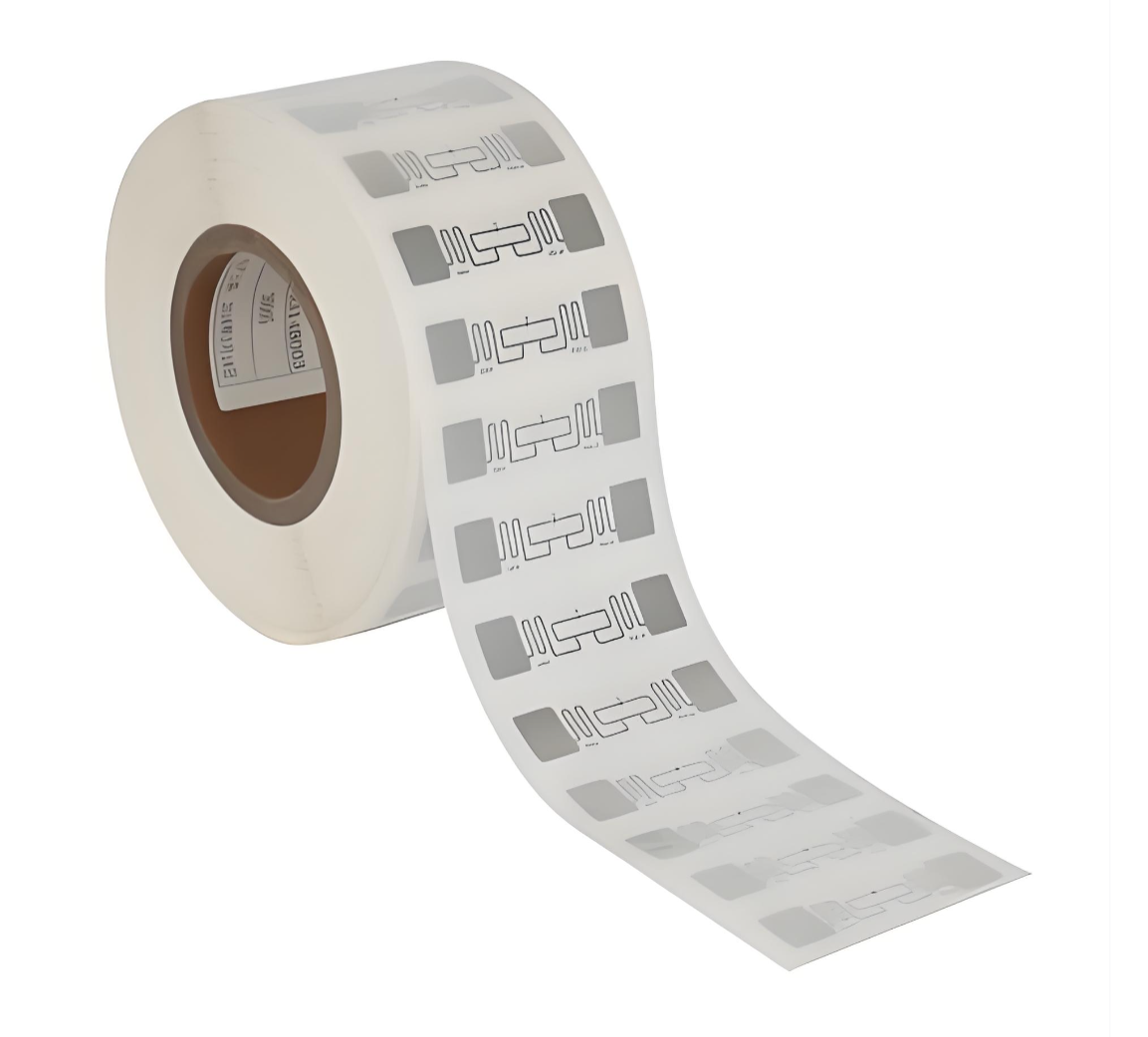
RFID Enables Real-Time, Line-of-Sight-Free Inventory Visibility
How electromagnetic coupling allows bulk, contactless reads—eliminating barcode scanning bottlenecks
RFID (Radio Frequency Identification) uses electromagnetic fields to automatically identify and track tags attached to objects—without requiring line of sight or physical contact. Unlike barcode systems that demand manual, item-by-item scanning, RFID enables simultaneous reading of dozens or even hundreds of tagged items, even through cardboard, plastic, or fabric packaging. This capability allows entire pallets or containers to be inventoried in seconds as they pass through warehouse portals, dock gates, or conveyor checkpoints—removing a major bottleneck in traditional inventory workflows.
Impact: Reduction in inventory cycle time from days to minutes and near-zero data latency
RFID transforms inventory management by compressing full-cycle counts from days to minutes while delivering near-real-time accuracy. Industry deployments consistently show:
- Up to 75% reduction in inventory counting time
- Near-elimination of manual scanning errors—commonly responsible for 1–3% inaccuracies in barcode-based systems
- Continuous, item-level visibility across receiving, storage, picking, and shipping
This shift from periodic snapshots to continuous monitoring supports faster replenishment decisions, prevents stockouts, and reduces excess inventory carrying costs—turning inventory from a static ledger into a dynamic operational asset.
RFID Enhances Disruption Resilience Through End-to-End Traceability
Proactive exception management: RFID-triggered alerts for delays, temperature deviations, and misrouted shipments
RFID strengthens supply chain resilience by enabling automated, real-time exception detection. Integrated sensor-enabled tags can instantly trigger alerts for shipment delays, temperature excursions, or geolocation anomalies—such as misrouted pallets—before issues escalate. In pharmaceutical logistics, for example, RFID-monitored cold chain compliance allows immediate intervention when thermal thresholds are breached, preserving product integrity without waiting for manual checks at destination points. These capabilities convert traditionally reactive processes into proactive, self-correcting workflows.
Case evidence: RFID adoption cut out-of-stocks by 16% and accelerated shelf replenishment by 30%
Major retailers leveraging RFID report a 16% reduction in out-of-stock incidents and a 30% acceleration in shelf replenishment cycles—driven by real-time visibility from distribution centers to the sales floor. By eliminating manual stock audits and enabling automated restocking triggers, these organizations reduced the average cost impact of disruption-related stockouts, which the Ponemon Institute estimates at $740,000 per incident (2023). Critically, RFID establishes a unified digital thread across manufacturing, warehousing, and retail—enabling coordinated responses and sustained operational continuity.
RFID Delivers Measurable Gains in Speed, Accuracy, and Labor Efficiency vs. Barcodes
Quantified advantages: 85% less manual scanning labor and 99.9%+ read accuracy in multi-SKU environments
RFID delivers clear, quantifiable improvements over barcodes: studies confirm up to 85% reduction in manual scanning labor and 99.9%+ read accuracy—even in dense, mixed-SKU environments where barcode readability falters. This performance stems from RFID’s ability to read hundreds of tags simultaneously via electromagnetic coupling, turning labor-intensive counts into rapid, automated events. When deployed at key workflow touchpoints—such as receiving docks or sortation conveyors—RFID further minimizes human error and accelerates data capture. Warehouses report 25% faster order fulfillment and 30–40% labor savings from eliminated manual counts, with ROI typically achieved within 18 months.
Strategic nuance: When barcodes still make sense—for low-value, high-volume items with minimal tracking needs
Barcodes remain a practical choice for specific scenarios—particularly for low-value, high-volume items like commodity consumables, where granular, real-time traceability offers limited strategic benefit. They require significantly lower upfront investment: tag and infrastructure costs run 60–70% less than RFID. Operations with static layouts and predictable, low-velocity workflows—such as bulk storage of uniform goods—can maintain acceptable accuracy without RFID’s advanced capabilities. The optimal tracking method hinges on three interrelated factors: item value density, required data granularity, and operational velocity.
| Tracking Method | Ideal Application | Cost Efficiency |
|---|---|---|
| Barcode | Low-value homogeneous items | High upfront savings |
| RFID | High-value mixed SKUs | Long-term labor reduction |
FAQ
What is RFID?
RFID (Radio Frequency Identification) is a technology that uses electromagnetic fields to identify and track tags attached to objects without requiring line of sight or physical contact.
How does RFID differ from barcodes?
Unlike barcodes, which require manual, item-by-item scanning, RFID enables simultaneous reading of multiple tagged items without requiring line-of-sight visibility. RFID significantly reduces inventory scanning time and errors.
What are the key benefits of RFID?
RFID provides real-time inventory tracking, reduces scanning errors, compresses inventory counting time, and enables proactive exception management in supply chains.
How does RFID improve supply chain resilience?
RFID allows real-time exception detection by triggering alerts for shipment delays, temperature excursions, and geolocation anomalies, transforming reactive processes into proactive workflows.
When should barcodes be used instead of RFID?
Barcodes remain suitable for low-value, high-volume items with predictable workflows, mainly when granular, real-time traceability is unnecessary and upfront investment costs must remain low.