
 EN
EN
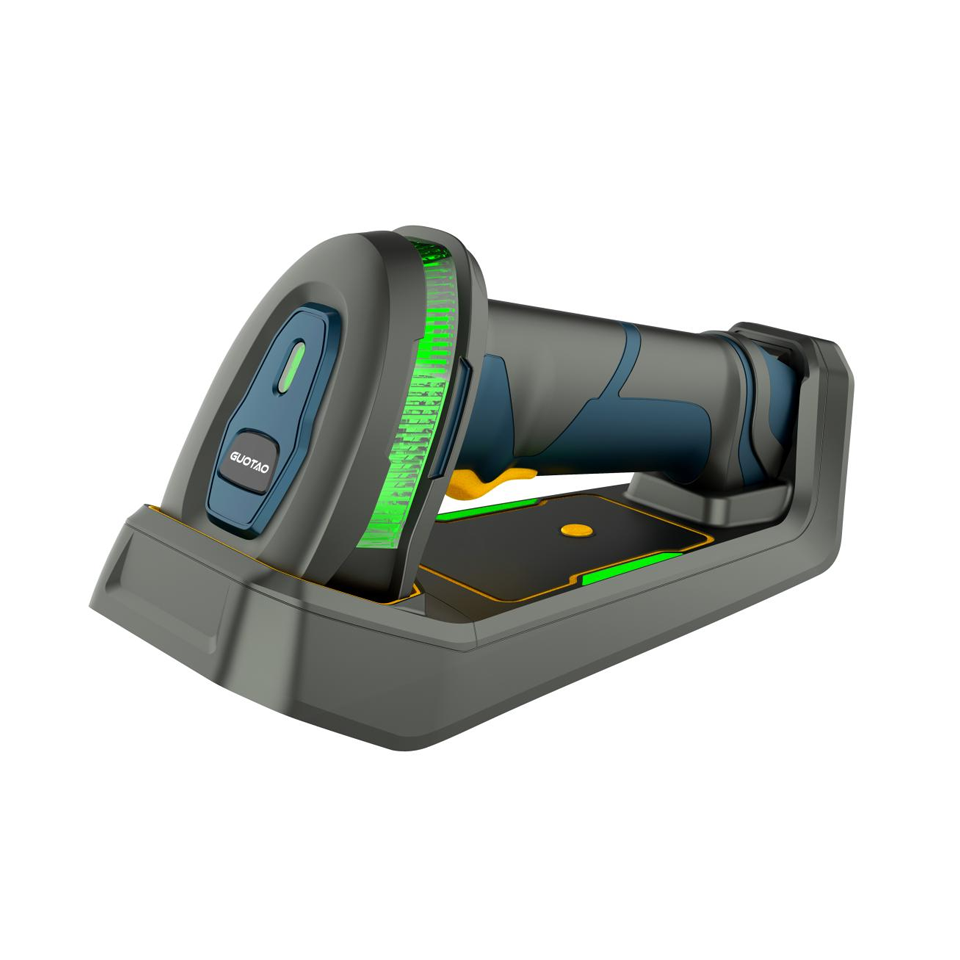
Retail-Optimized Barcode Scanner Solutions for High-Speed Checkout
Rugged, Ergonomic Hardware Designed for Peak Retail Throughput
Retail checkout speed hinges on hardware built for endurance and ease of use. Modern scanners for high-traffic environments feature drop resistance (tested to multiple feet onto concrete), IP-rated sealing against dust and spills, and ergonomic pistol-grip designs that reduce wrist strain and increase scan rates by up to 20% over legacy models. Advanced scan engines decode both 1D and 2D barcodes in under 30 ms—even on curved, faded, or damaged labels—eliminating the need for precise alignment. Motion-tolerant reading enables items to be waved past without stopping the conveyor belt, while field-replaceable cables and hot-swap batteries ensure uninterrupted operation during peak hours. Collectively, these features support sustained throughput above 30 items per minute, directly addressing the 78% increase in customer attrition linked to long checkout lines (McKinsey 2023).
Seamless POS and Cloud Inventory Integration for Real-Time Stock Accuracy
A barcode scanner’s value is realized only when its data flows instantly into core business systems. Direct integration with point-of-sale (POS) terminals and cloud-based inventory platforms triggers real-time price lookups, promotion application, and automatic stock deduction—reducing manual entry errors (which occur in 1–3% of high-volume transactions) and preventing the $1 trillion in annual global losses tied to out-of-stock situations (IHL Group 2023). This integration also powers automated replenishment: when inventory dips below preset thresholds, the system initiates restocking without staff intervention. For omnichannel operations, each scan updates cloud databases within seconds—ensuring accurate, synchronized availability across stores, apps, and websites. Integrated scanners further support customer-facing displays for instant price verification, building trust and reducing disputes. Real-time synchronization also strengthens loss prevention by flagging mismatches between scanned items, scale weight, and register entries—closing the shelf-to-cash gap and sustaining inventory accuracy above 99%, even across large multi-store footprints.
Logistics-Focused Barcode Scanner Solutions for Automated Sorting & Distribution
Fixed-Mount and Wearable Scanners for Dynamic Sorting Line Environments
High-speed sortation demands reliable, multi-angle data capture—without slowing the line. Fixed-mount scanners mounted at induction points and diverter gates achieve read rates exceeding 99.5%, cutting manual sort labor by up to 50% (Logistics Tech Review, 2023). Their industrial-grade housings resist vibration, dust, and impact, enabling extended maintenance intervals on 24/7 operations. Wearable scanners—ring- or glove-mounted—free both hands for workers handling irregular, oversized, or unstable parcels, enabling real-time re-routing per WMS instructions and reducing mis-sorts. The table below compares deployment contexts and benefits:
| Scanner Type | Typical Deployment | Key Benefit | Common Use Case |
|---|---|---|---|
| Fixed‑mount | Overhead on conveyor frames | Hands‑free, ultra‑fast reads for high‑throughput | Auto‑induction, tray sorter verification |
| Wearable | Worn on finger or back of hand | Mobility plus instant code capture | Loose‑item picking, exception handling |
Using both form factors ensures end-to-end coverage—from tunnel scanning to manual exception stations—so no label goes unread.
Enterprise-Grade Reliability in High-Volume Warehousing and Cross-Dock Operations
Warehouse and cross-dock environments demand hardware engineered for extremes: temperature swings from −20 °C to 50 °C, constant forklift vibration, and heavy particulate exposure. Enterprise-grade scanners meet stringent IP and MIL-STD ratings, sustain millions of actuations, and maintain decoding accuracy under stress. In time-sensitive hubs where a single missed scan cascades into routing failures, redundancy is critical—dual-lens readers and backup power supplies limit unplanned downtime to under 0.1%. Large-scale operators report a 35% reduction in re-work incidents after upgrading to industrial readers (Supply Chain Automation Report, 2024). Predictive health monitoring adds another layer of resilience, proactively alerting to lens degradation or communication faults—aligning with zero-failure targets during peak-season surges.
Unified Integration Architecture for Barcode Scanner Ecosystems
API-First Connectivity with WMS, ERP, and Omnichannel Platforms
Modern barcode scanner ecosystems rely on API-first connectivity—not custom middleware—to synchronize seamlessly with Warehouse Management Systems (WMS), Enterprise Resource Planning (ERP), and omnichannel sales platforms. RESTful APIs and standardized SDKs decouple device-level logic from backend infrastructure, enabling rapid, vendor-agnostic integration across retail POS, warehouse automation, and sorting systems. According to Gartner (2024), this approach reduces deployment time by up to 35% versus legacy middleware-dependent setups. Critically, it allows organizations to unify scan data into a single source of truth—improving inventory visibility, accelerating issue resolution, and supporting scalable expansion—all without locking into proprietary stacks.
Custom Barcode Scanner Software Development for Scalable Deployment
Scalable custom barcode software starts with a platform-agnostic, modular architecture—designed to run natively across web, desktop, and mobile OSes without sacrificing speed or accuracy. Leveraging a commercial-grade scanning SDK—not open-source alternatives—delivers battle-tested decoding for low-contrast, distorted, or miniature barcodes, along with ongoing updates and enterprise support. This eliminates the cost and risk of maintaining complex image-processing pipelines in-house.
Development follows a disciplined path: platform selection → SDK integration → workflow-optimized UI/UX design. In logistics, features like multi-scan and batch-scan modes cut handling time; in retail, tight handshake with cloud inventory systems ensures pricing and promotions apply instantly. Core scanning logic is strictly separated from presentation layers—enabling reuse across handheld terminals, fixed-mount cameras, and mobile carts. Backend services are containerized to scale elastically with demand—spun up for holiday peaks without client-side changes. And because the application exposes standardized APIs, decoded data flows securely and immediately to WMS, ERP, and omnichannel platforms. This SDK-powered, modular foundation delivers one adaptable codebase—consistent in performance, secure in compliance, and resilient across evolving operational needs.
FAQs
What are the key benefits of using ergonomic barcode scanners?
Ergonomic barcode scanners reduce wrist strain, enhance user comfort, and increase scan rates by up to 20% compared to legacy models. They also feature rugged designs for high-traffic environments.
How do barcode scanners integrate with POS and inventory systems?
Barcode scanners integrate directly, enabling real-time price lookups, promotion application, and automatic inventory updates. This reduces manual entry errors and supports omni-channel operations.
What makes enterprise-grade scanners reliable for warehouse environments?
They are built to withstand extreme environmental conditions like temperature swings, vibration, and dust, while ensuring high decoding accuracy and proactive health monitoring to prevent downtime.
Why is API-first connectivity important for barcode ecosystems?
API-first connectivity enables seamless integration across systems, reduces deployment times, and unifies scan data for better inventory visibility and expanded scalability.
What are the advantages of using commercial-grade scanning SDKs?
Commercial-grade scanning SDKs deliver high accuracy for challenging barcodes, minimize maintenance costs, and ensure ongoing updates and enterprise-level support.
Table of Contents
- Retail-Optimized Barcode Scanner Solutions for High-Speed Checkout
- Logistics-Focused Barcode Scanner Solutions for Automated Sorting & Distribution
- Unified Integration Architecture for Barcode Scanner Ecosystems
- Custom Barcode Scanner Software Development for Scalable Deployment
-
FAQs
- What are the key benefits of using ergonomic barcode scanners?
- How do barcode scanners integrate with POS and inventory systems?
- What makes enterprise-grade scanners reliable for warehouse environments?
- Why is API-first connectivity important for barcode ecosystems?
- What are the advantages of using commercial-grade scanning SDKs?