
 EN
EN
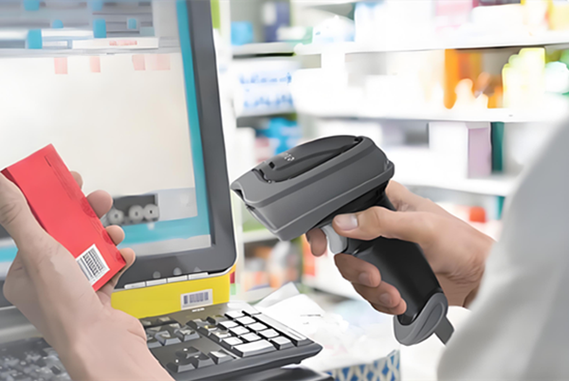
The Inventory Accuracy Crisis and Why Barcode Technology Is the Foundational Fix
Manual inventory management remains a persistent source of costly errors in retail. Each misplaced item, mistyped quantity, or overlooked SKU compounds into stock discrepancies that erode profit margins and damage customer trust. Studies show manual data entry carries error rates as high as 68%—a single keystroke mistake can distort an entire inventory record. These inaccuracies cascade into overstocking, stockouts, and wasted labor hours spent reconciling physical counts with digital records.
Barcode technology directly addresses this crisis by removing human intervention from data capture. When a barcode is scanned, the system instantly retrieves the correct product identifier, quantity, and location—eliminating typos and transcription errors. This shift transforms inventory accuracy from a gamble into a predictable outcome. Real-time updates ensure stock levels are reconciled immediately after each movement—whether receiving, selling, or transferring goods—creating a single source of truth where physical inventory consistently matches digital records.
By automating the foundational layer of inventory tracking, barcode technology ensures every downstream decision—reordering, fulfillment, or forecasting—rests on reliable data. Without this fix, even the most sophisticated management software will be undermined by faulty inputs.
Barcode Implementation Across Core Retail Inventory Workflows
Receiving, cycle counting, BOPIS, and returns: Standardizing touchpoints with barcode scanning
Every inventory touchpoint—from receiving shipments to performing cycle counts, fulfilling buy-online-pick-up-in-store (BOPIS) orders, and processing returns—benefits from a unified barcode scanning process. At the back dock, scanning each item’s barcode instantly updates the inventory system, eliminating manual data entry errors. During cycle counting, staff scan shelf barcodes instead of keying in quantities—cutting counting time by up to 80% while boosting accuracy. For BOPIS, a quick scan confirms the correct item is picked, reducing substitutions and customer complaints. Returns work the same way: scanning the returned product automatically triggers restock or disposition workflows. Standardizing across all these activities ensures data consistency and minimizes training overhead.
Scanner selection strategy: Handheld vs. fixed-position — balancing throughput, labor, and store layout
Choosing between handheld and fixed-position barcode scanners depends on workflow volume, mobility needs, and store layout. Handheld scanners offer flexibility for mobile tasks like cycle counting, returns processing, and shelf audits—allowing staff to move freely without dedicated stations. However, they require operator time and can bottleneck high-volume receiving. Fixed-position scanners—such as tunnel or hands-free presentation units—excel at throughput during receiving and checkout, scanning dozens of items per minute without manual handling. They reduce repetitive motion injuries but demand dedicated counter space. Retailers should match scanner type to each workflow’s demands: fixed scanners at receiving docks and handheld units for floor-level audits.
Integrating Barcode Scanners with Inventory Management Systems
A barcode scanner is only as powerful as the system it feeds. Without tight integration into your inventory management software, scanned data remains siloed and prone to delays. The core challenge lies in synchronizing barcode hardware with the broader technology stack—including point-of-sale (POS) terminals, enterprise resource planning (ERP) platforms, and warehouse management systems. When done correctly, every scan becomes a real-time transaction that updates stock levels, triggers reorder alerts, and reconciles counts automatically. Retailers that neglect integration often face discrepancies between physical inventory and system records—undermining the very accuracy barcode technology promises.
Cloud-native interoperability: API-driven sync between barcode hardware, POS, and ERP platforms
Modern retail environments increasingly rely on cloud-based inventory management systems to unify distributed stores, warehouses, and eCommerce channels. The key enabler is an application programming interface (API) that allows barcode scanners to push data directly to the cloud, where POS and ERP systems consume it in near real time. This architecture eliminates batch uploads and manual data entry—the primary sources of latency and human error.
For example, when a worker scans incoming goods, the API triggers an immediate adjustment in the ERP’s inventory ledger and updates the POS system’s available-for-sale count. Similarly, cycle count results flow back to the cloud, enabling multi-user synchronization so two employees scanning in different aisles never create conflicting records. Cloud-native interoperability also simplifies scaling: new stores can be onboarded without installing on-premise servers, and updates to scanning logic are pushed centrally.
When choosing a solution, retailers should verify that the API supports standard data formats (e.g., JSON) and offers documented endpoints for custom workflows—ensuring the barcode system acts as a seamless bridge between physical stock and digital records, not an isolated tool.
Measurable Business Benefits of Barcode-Driven Inventory Control
Accuracy, speed, and scalability: From 68% manual error rates to 99.99% scan reliability
Manual inventory processes suffer from high error rates—up to 68% in data entry and counting tasks. Barcode scanning drops that error rate to less than 0.01%, achieving 99.99% accuracy. This leap in precision directly reduces costly shipping errors, stockouts, and overstock situations. Speed improves dramatically: a full physical inventory that once took an entire day can now be completed in hours—or even minutes. Barcode-driven workflows allow cycle counts to happen more frequently without disrupting operations. Scalability follows naturally—the same scanning infrastructure works for a single store or hundreds of locations.
| Metric | Manual Process | Barcode-Driven |
|---|---|---|
| Error rate | Up to 68% | 0.01% (99.99% accuracy) |
| Cycle count time (1000 items) | ~8 hours | ~30 minutes |
| Real-time visibility | None | Instant updates |
| Scalability | Labor-intensive | Linear with scanning points |
These measurable benefits translate into lower labor costs, fewer write-offs, and better demand forecasting. For retailers, barcode-driven inventory control is not just an operational upgrade—it is a direct contributor to profitability and growth.
FAQs
What is the primary benefit of barcode technology in inventory management?
Barcode technology eliminates human errors in data entry, ensuring accurate and real-time inventory tracking.
How does barcode scanning improve cycle counting?
Barcode scanning cuts counting time by up to 80% and boosts accuracy by replacing manual keying with automated data capture.
What types of barcode scanners are best for retail workflows?
Handheld scanners offer flexibility for mobile tasks like cycle counting and shelf audits, while fixed-position scanners excel at high-volume receiving and checkout.
Why is integration between barcode scanners and inventory systems crucial?
Integration ensures scanned data updates inventory records, triggers reorder alerts, and reconciles counts in real time without delays or errors.
What are the measurable improvements of using barcode-driven inventory control?
Improvements include reducing error rates to 0.01%, slashing cycle count times, ensuring real-time inventory visibility, and facilitating scalability.
Table of Contents
- The Inventory Accuracy Crisis and Why Barcode Technology Is the Foundational Fix
- Barcode Implementation Across Core Retail Inventory Workflows
- Integrating Barcode Scanners with Inventory Management Systems
- Measurable Business Benefits of Barcode-Driven Inventory Control
-
FAQs
- What is the primary benefit of barcode technology in inventory management?
- How does barcode scanning improve cycle counting?
- What types of barcode scanners are best for retail workflows?
- Why is integration between barcode scanners and inventory systems crucial?
- What are the measurable improvements of using barcode-driven inventory control?