
 EN
EN
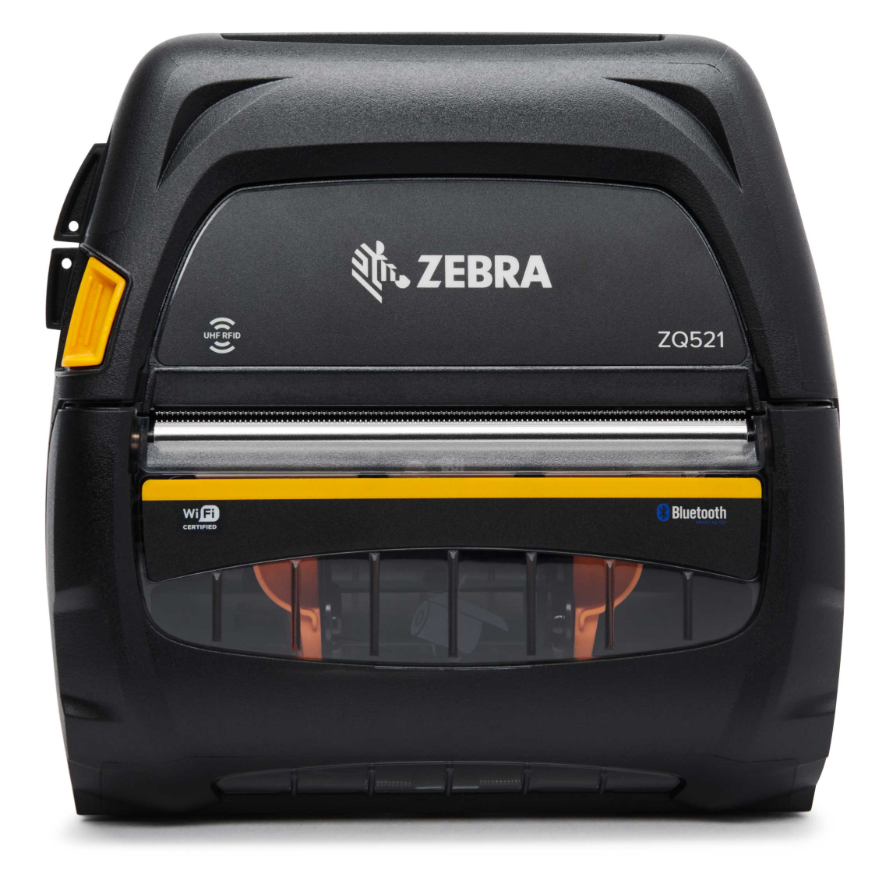
Why DPI Matters: The Direct Link Between Label Printer Resolution and Barcode Scannability
300 dpi vs. 600 dpi Thermal Printheads: Physics of Dot Placement for Sub-2mm Barcodes
A thermal label printer constructs a barcode by fusing discrete dots onto the substrate. DPI (dots per inch) defines the smallest resolvable mark—directly governing the minimum bar or space width the printhead can reproduce with fidelity. At 300 dpi, each dot measures ~0.085 mm; at 600 dpi, it shrinks to ~0.042 mm. This difference is decisive for barcodes under 2 mm: a narrow bar must contain multiple dots to retain edge definition and structural integrity. A 300‑dpi printer typically supports a minimum bar width of 0.17 mm, while 600 dpi enables 0.09 mm—nearly doubling the achievable density.
As symbol size decreases, dot gain, media absorption, and thermal spread amplify. Coarser 300‑dpi dot clusters produce irregular, feathered edges on sub‑2mm bars—increasing white voids, incomplete fill, and dimensional drift. In contrast, the tighter dot pitch of a 600‑dpi printhead preserves straight, high-contrast boundaries—the two foundational requirements for reliable scanner decoding. The result is not incremental improvement but a step-change in performance: crisp edges, tighter dimensional tolerances, and consistent reflectance profiles essential for micro-electronics, pharmaceutical vials, and other space-constrained applications.
ISO/IEC 15416 Compliance: How Minimum Edge Contrast and Modulation Depend on Label Printer Resolution
ISO/IEC 15416 evaluates barcode print quality using objective metrics—including minimum edge contrast, modulation, and defect severity—all tied to how cleanly a bar transitions into its adjacent space. These parameters rely fundamentally on edge sharpness and uniformity—both dictated by printhead resolution.
Low-resolution printing introduces soft, inconsistent edges that erode edge contrast and depress modulation below the required 0.50 threshold. Studies show 203‑dpi printers routinely fail to achieve a passing grade (C or better) on barcodes narrower than 5 mm; 300‑dpi units struggle with elements under 2 mm. By contrast, 600‑dpi thermal printheads deliver precise, repeatable dot placement that minimizes edge roughness and stabilizes reflectance across the symbol’s width—sustaining edge contrast above 15 % and modulation well above the standard’s minimum—even for symbols under 2 mm.
In highly regulated environments—pharma, medical devices, aerospace—where every label must carry a verifiable ISO/IEC 15416 grade, resolution isn’t optional. It’s deterministic: selecting a 600‑dpi label printer for fine-feature symbologies eliminates avoidable scan failures, rework, and compliance exposure before they occur.
High-Resolution Label Printers Deliver Critical Small-Text Legibility in Regulated Industries
4–6 pt Font Clarity Requirements in Pharma, Logistics, and Medical Device Labeling
Regulatory mandates demand legibility at extreme scale. FDA’s Unique Device Identification (UDI) rule and GMP guidelines require batch numbers, expiration dates, and serialized codes printed at 4–6 pt to remain scannable and human-readable across a product’s entire lifecycle—from sterile packaging to point-of-care use. Similarly, logistics operations depend on small-text shipping labels where addresses, handling instructions, and tracking codes must withstand automated sorting and manual verification.
Low-resolution output blurs condensed fonts: broken stems, fused counters, and jagged serifs compromise character integrity. On IV bags, pill bottles, or micro-device labels, even minor degradation can trigger misreads—causing shipment misrouting, dispensing errors, or audit nonconformities. High-DPI thermal printheads resolve this by rendering clean, high-contrast edges that preserve open counters and proportional spacing—enabling consistent human verification and machine decode without re-labeling or workflow interruption.
Validation Evidence: 600 dpi Label Printers Reduce Character Misreads by 92% vs. 203 dpi (UL 2023 Study)
A 2023 UL study found that 600 dpi label printers reduce character misreads by 92% compared to 203 dpi models—particularly for 4–6 pt text used in pharmaceutical and medical device labeling. This dramatic improvement stems from superior linear resolution: twice the dot density eliminates the stair-stepping, fill gaps, and edge distortion that cause “8” to be misread as “6”, or “B” as “8”. Critically, the same high-resolution output that ensures text clarity also meets ISO/IEC 15416 Grade A barcode verification—confirming that resolution drives both human and machine readability.
The operational impact is measurable: reduced manual inspection time, fewer patient safety events linked to labeling errors, and strengthened supply chain integrity. Upgrading to 600 dpi isn’t merely a quality enhancement—it’s a validated, regulatory-aligned investment in accuracy, traceability, and risk mitigation.
Beyond DPI: How Label Material and Thermal Transfer Interact with Label Printer Resolution
Coated vs. Uncoated Stocks, Glossy vs. Matte Surfaces: Their Impact on Dot Gain and Edge Sharpness
Printhead resolution sets the theoretical limit of detail—but the substrate determines how much of that detail survives transfer. Coated paper stocks feature a smooth, sealed surface that confines thermal-transferred dots to their intended footprint, preserving edge definition and minimizing dot gain. Uncoated, fibrous papers absorb ink laterally along cellulose fibers, expanding dot diameter by 20–30%. That expansion fuses adjacent bars in sub‑2 mm barcodes and fills the counters of small text—degrading both scannability and legibility.
Glossy coatings take precision further: their near-mirror finish suppresses capillary wicking entirely, maximizing modulation and edge contrast—key drivers of ISO/IEC 15416 Grade A performance. Matte surfaces, while reducing glare, introduce microscopic texture that scatters ribbon ink slightly—softening character edges and increasing decode risk, especially when paired with low-DPI printheads.
For mission-critical 4–6 pt fonts in pharma and logistics, pairing a 600 dpi label printer with glossy coated stock consistently delivers the open counters, crisp stems, and high edge contrast associated with UL’s observed 92% reduction in misreads. Thermal transfer chemistry further modulates results: resin ribbons on synthetic matte labels yield durable, defined edges even at lower DPI, while wax/resin ribbons on glossy coated paper optimize sharpness across the full 300–600 dpi range.
The takeaway is clear: resolution and substrate are interdependent variables—not standalone specs. Engineering them together ensures edge sharpness; specifying one without the other guarantees compromised performance.
FAQ
Why does DPI matter for barcode printing?
DPI impacts barcode precision by defining the smallest resolvable mark. Higher DPI ensures cleaner edges and smaller bar widths, improving scannability for compact symbols.
What are the benefits of 600 dpi printers for small text?
600 dpi printers produce sharper text edges and proportional spacing, dramatically reducing character misreads, especially for 4–6 pt fonts in pharma and logistics applications.
How does label material impact resolution output?
Coated stocks preserve sharp edges by confining thermal-transferred dots, while uncoated papers can expand and blur detail due to absorption and lateral ink spread.
What is ISO/IEC 15416 compliance, and how is it affected by resolution?
ISO/IEC 15416 defines barcode quality metrics like edge contrast and modulation. High-resolution printers improve these metrics by producing sharp, consistent edges essential for passing the compliance grade.