
 EN
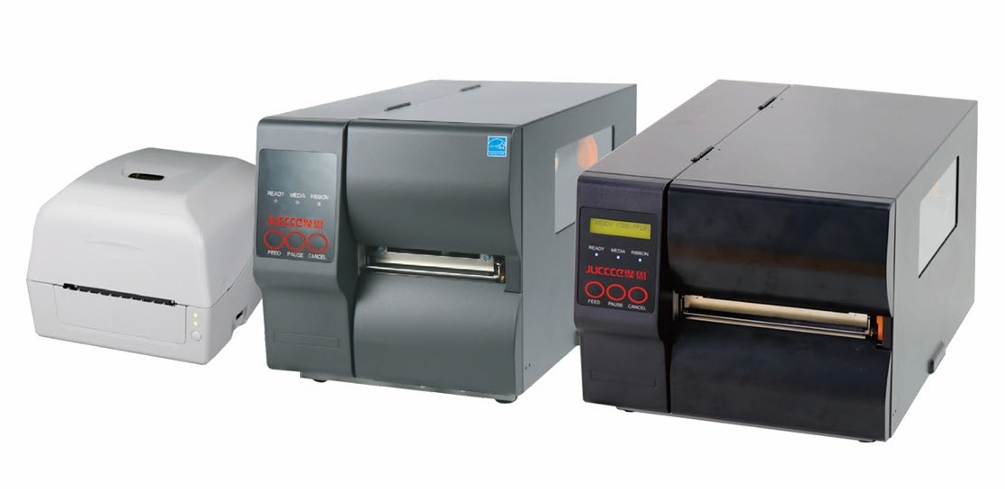
Barcode Printers in Manufacturing: Driving Traceability and Real-Time Inventory Control
Integration with MES and ERP for end-to-end production visibility
Barcode printers that integrate directly with Manufacturing Execution Systems (MES) and Enterprise Resource Planning (ERP) platforms transform production floors into transparent, data-driven hubs. Unlike standalone labeling—which relies on manual data entry—connected printers automatically encode work orders, lot numbers, and machine IDs onto labels in real time. This tight linkage delivers instant visibility into WIP inventory levels, machine utilization, and order progress for supervisors. A 2023 benchmark report from a leading industrial automation provider found such integration reduced manual entry errors by up to 75% and lifted inventory record accuracy beyond 99%. Real-time data exchange also improves first-pass yield: operators verify the correct component is at the right station before assembly begins, preventing costly misassemblies. Each print event is automatically logged, creating a tamper-proof audit trail essential for ISO 9001 and IATF 16949 compliance. When every barcode label feeds a living production record, manufacturers detect bottlenecks early, reroute jobs dynamically, and ensure full traceability—from receiving through shipping—strengthening both operational efficiency and quality assurance. The result is faster time-to-customer and lower total cost of ownership.
Case example: Automotive Tier-1 supplier cut scrap by 22% using verified on-demand labeling
A Tier-1 supplier of advanced braking systems faced rising scrap rates driven by mislabeled components and rework. In 2024, the company deployed industrial barcode printers with on-label verification—a technology that grades each printed label in real time against ISO/IEC 15416 standards and discards non-compliant prints. Workers now generate serialized, GS1-compliant labels at the point of use, linked directly to the MES. This eliminated illegible or misapplied labels that previously triggered wrong-part assembly downstream. Within six months, scrap attributable to labeling errors fell by 22%, yielding annual material savings of approximately $410,000. Quality-hold inventory dropped 40% as every part became confidently traceable to its production batch. Auditors now retrieve full production histories in minutes—not hours—reinforcing the supplier’s IATF 16949 compliance. Verified on-demand labeling proves itself not just a quality control step, but a strategic lever for cost reduction and process reliability.
Barcode Printers in Logistics: Accelerating Accurate Shipping, Sorting, and Receiving
E-commerce pressure demands error-free dynamic label generation
E-commerce growth has intensified pressure on logistics operations to ship more—faster—without sacrificing accuracy. Barcode printers meet this demand through dynamic label generation: each label is built on-the-fly with variable data including destination addresses, barcodes, handling instructions, and customer-specific references. This real-time output eliminates slow, error-prone manual labeling and drastically reduces mis-sorts and delivery failures. Embedded Automatic Identification and Data Capture (AIDC) turns every package into a scannable, trackable unit—feeding sorting systems with precise, machine-readable data needed for fully automated routing. When integrated into high-speed fulfillment lines, these printers deliver error-free labels at line speed, enabling logistics providers to meet tight shipping cutoffs while preserving delivery integrity—even during peak volume periods.
WMS synchronization for intelligent shipping labels and automated receiving workflows
Deep integration between barcode printers and warehouse management systems (WMS) elevates label production from a transactional task to a core automation enabler. The WMS pushes shipment details—carrier, service level, weight, and order contents—directly to the printer, which instantly generates intelligent shipping labels containing all required barcodes and machine-readable fields. At sorting hubs, conveyor-mounted scanners read these labels in milliseconds, triggering diverters to route parcels down the correct lane—achieving throughput rates far beyond manual capability. The same synchronization accelerates receiving: inbound goods are labeled with receiving barcodes that update inventory records the moment they’re scanned, eliminating keying errors and shrinkage. By closing the loop between software logic and physical labeling, barcode printers convert WMS data into reliable, automated actions—boosting accuracy, throughput, and end-to-end visibility across the logistics chain.
Barcode Printer Performance Essentials: Speed, Durability, and Print Accuracy
Thermal transfer vs. direct thermal: Choosing the right barcode printer technology for environment and lifespan
Selecting the right barcode printer hinges on matching technology to application requirements—particularly environmental exposure and required label lifespan. Thermal transfer printers use a wax- or resin-based ribbon to fuse ink onto durable media, producing labels resistant to heat, moisture, abrasion, and UV exposure—ideal for long-life asset tags and demanding manufacturing or field environments. Direct thermal printers, by contrast, rely on heat-sensitive media without a ribbon—reducing consumable costs but limiting label life: images fade within months under UV light, friction, or elevated temperatures, making them suitable only for short-term applications like shipping labels. While direct thermal units often offer slightly higher speeds (up to 300 mm/s) and simpler mechanics, their reliability advantage applies exclusively to temporary use cases. Thermal transfer may be marginally slower due to ribbon handling, but its durability ensures consistent, scannable barcodes over the product’s entire lifecycle—avoiding costly misreads, line stoppages, or compliance failures. For reliable 2D scanning, a minimum resolution of 300 dpi is recommended. Ultimately, the decision rests on where and how long the label must perform—not just initial cost or speed.
Label Quality Assurance: Why Built-in Verification Is Non-Negotiable for Reliable Scanning
ISO/IEC 15416-compliant on-printer verification prevents downstream scanning failures
A barcode that looks fine to the naked eye but fails formal verification can trigger expensive disruptions across operations. ISO/IEC 15416 defines the rigorous methodology for evaluating print quality—including contrast, modulation, and edge determination—metrics handheld scanners cannot assess reliably. Relying solely on post-print checks leaves a critical gap: a label deemed acceptable in a casual scan may still earn a low grade when read by high-speed tunnel scanners, resulting in rejected shipments, carrier chargebacks, or production-line stoppages that erode throughput. Integrating an ISO/IEC 15416-compliant verifier directly into the barcode printer enables immediate, automated grading at the point of print. This detects subtle printhead wear, ribbon inconsistencies, or media defects before faulty labels enter the workflow—allowing the printer to void and reprint automatically. By halting non-compliant labels at the source, manufacturers and logistics providers prevent the domino effect of unreadable codes undermining automated sorting, compliance audits, and inventory accuracy—making on-printer verification not optional, but foundational to operational resilience.
FAQ
What is the significance of integrating barcode printers with MES and ERP systems?
Integrating barcode printers with MES and ERP systems enables real-time encoding of work orders, lot numbers, and machine IDs, improving inventory control, traceability, and production visibility while reducing manual entry errors.
How do barcode printers improve logistics operations?
Barcode printers enhance logistics by enabling dynamic, error-free label generation, ensuring accurate package routing, and synchronizing with warehouse management systems (WMS) to automate inventory updates, improving accuracy and throughput.
What is the difference between thermal transfer and direct thermal barcode printers?
Thermal transfer printers use ribbons for durable labels suitable for harsh environments, while direct thermal printers use heat-sensitive media for temporary labels, often faster and less expensive for short-term applications like shipping.
Why is on-printer label verification important?
On-printer verification, compliant with ISO/IEC 15416 standards, ensures label quality at the point of print, preventing scanning issues, rejected shipments, and operational disruptions caused by unreadable barcodes.
Can barcode printers help reduce production waste?
Yes, verified on-demand labeling minimizes errors in component assembly and traceability, reducing scrap rates and rework, as demonstrated by the automotive Tier-1 supplier case study highlighted in this article.
Table of Contents
- Barcode Printers in Manufacturing: Driving Traceability and Real-Time Inventory Control
- Barcode Printers in Logistics: Accelerating Accurate Shipping, Sorting, and Receiving
- Barcode Printer Performance Essentials: Speed, Durability, and Print Accuracy
- Label Quality Assurance: Why Built-in Verification Is Non-Negotiable for Reliable Scanning
-
FAQ
- What is the significance of integrating barcode printers with MES and ERP systems?
- How do barcode printers improve logistics operations?
- What is the difference between thermal transfer and direct thermal barcode printers?
- Why is on-printer label verification important?
- Can barcode printers help reduce production waste?