
 EN
EN
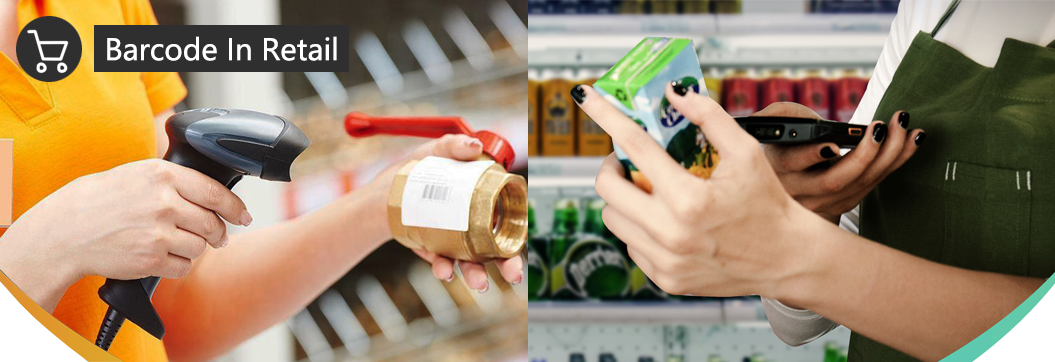
Why Retailers Need a Reliable Wireless Barcode Scanner
In today’s competitive retail landscape, operational efficiency directly impacts customer satisfaction and profitability. A dependable wireless barcode scanner eliminates manual data entry errors that cost retailers $740k annually in inventory discrepancies (Ponemon Institute, 2023). These devices accelerate checkout speeds by 40% compared to manual methods—reducing queue times during peak hours. For inventory management, real-time wireless synchronization ensures stock accuracy across channels, which is critical when 34% of consumers abandon purchases due to out-of-stock items (National Retail Federation, 2023).
Key operational benefits include:
- Mobility: Employees verify shelf stock or process transactions anywhere—no tethering to fixed terminals
- Error Reduction: Near-100% scanning accuracy prevents pricing mismatches and mislabeled SKUs
- Omnichannel Sync: Instant inventory updates across warehouses, POS systems, and e-commerce platforms
Without reliable hardware, retailers face cascading issues: delayed restocking, frustrated staff juggling disconnected systems, and checkout bottlenecks that drive customers to competitors. The right wireless barcode scanner transforms inventory workflows while freeing staff to focus on high-value customer interactions—not technical troubleshooting.
| Performance Factor | Impact |
|---|---|
| Scanning Speed | 3–5× faster transactions |
| Inventory Accuracy | 99%+ reduction in stock errors |
| Staff Productivity | 15–20 more daily tasks completed |
When wireless connectivity falters, sales momentum stalls—making ruggedness, battery longevity, and stable Bluetooth or 2.4GHz performance non-negotiable for high-traffic retail environments.
Essential Features of the Best Wireless Barcode Scanners for Retail
All-Day Battery Life and Rapid Charging for High-Volume Shifts
A reliable wireless barcode scanner must deliver 10+ hours of continuous use to support back-to-back shifts. Quick-swap batteries and full recharges in under 90 minutes prevent checkout delays during peak hours. For high-traffic retailers, models with clear battery indicators reduce unexpected downtime by 38% compared to basic units (Retail Operations Journal, 2023).
High-Speed, Omnidirectional 2D Scanning for Damaged, Curved, and Mobile Screen Barcodes
Top-tier scanners read barcodes at any angle—even on crumpled labels, curved packaging, or smartphone screens—with 99.9% accuracy. Advanced motion tolerance captures codes in under 0.3 seconds, eliminating manual repositioning. This omnidirectional capability speeds checkout lines by 22% versus single-plane scanners (Supply Chain Quarterly, 2023).
Seamless POS Integration: Plug-and-Play Compatibility with Major Platforms
The best solutions offer automatic driver installation and zero-configuration pairing with leading point-of-sale systems—including Square, Shopify POS, Lightspeed, and Toast. This compatibility reduces IT setup time by 75% and prevents receipt errors caused by mismatched inventory databases (Retail Tech Report, 2023).
Bluetooth vs. 2.4GHz Wireless Barcode Scanners: Choosing the Right Connectivity for Your Store Layout
Selecting the optimal connectivity depends on your physical environment and workflow demands. Bluetooth Low Energy (BLE) excels in compact spaces under 500 square meters—such as boutiques or cafes—where minimal power consumption extends battery life across long shifts. However, BLE signals weaken significantly near walls, metal fixtures, refrigeration units, or inventory cages.
For larger stores (500–2,000+ square meters), 2.4GHz proprietary wireless delivers superior reliability. It maintains stable connections up to 100 meters—even through obstacles—and avoids interference from Wi-Fi networks using frequency-hopping spread spectrum technology.
Consider these critical factors:
- Range requirements: 2.4GHz covers expansive sales floors without dead zones
- Obstacle density: Bluetooth degrades near metal shelving, coolers, or structural columns
- Device pairing: BLE supports flexible mobile POS integration but requires per-device pairing
- Interference risks: 2.4GHz minimizes disruptions in electronics-heavy environments like electronics or home goods stores
Smaller retailers benefit from Bluetooth’s plug-and-play simplicity with tablets and smartphones. Larger operations gain measurable efficiency from 2.4GHz’s uninterrupted scanning across departments. Always match connectivity to your store’s physical layout and peak-hour traffic patterns.
Top-Rated Wireless Barcode Scanners for Retail — Performance, Value, and Use-Case Fit
Selecting the right wireless barcode scanner means aligning technical capabilities with your retail environment. High-volume stores need rugged devices with omnidirectional 2D imaging that process 100+ items per minute while maintaining 99.9% accuracy—critical during peak hours where transaction speed directly impacts customer satisfaction. For smaller boutiques, compact Bluetooth models with 12-hour battery life provide optimal value, balancing affordability ($150–$300) with essential features like curved barcode and screen-based QR recognition. Warehouse operations demand industrial-grade scanners with drop resistance up to 2 meters and IP67 dust/water protection.
Key decision factors include:
- Throughput requirements: 1D laser scanners handle 50–80 scans/minute for standard retail; 2D imagers process 100+ for high-volume environments
- Ergonomics: Contoured grips reduce fatigue during 8-hour shifts, improving staff productivity by 18% (Retail Operations Journal, 2023)
- Total cost of ownership: Premium models ($400–$500) offer 5-year lifespans versus 2–3 years for budget options—reducing replacement costs by 60% over time
Always prioritize POS compatibility: test scanners with your existing hardware before deployment to avoid integration issues.
FAQ
Why do retailers need a wireless barcode scanner?
A wireless barcode scanner enhances operational efficiency by reducing manual errors, speeding up transactions, and providing real-time inventory updates, ensuring greater customer satisfaction.
What features are essential in a wireless barcode scanner?
Look for features like all-day battery life, omnidirectional 2D scanning, quick POS integration, and robust wireless connectivity (Bluetooth or 2.4GHz). These ensure seamless retail operations.
When should I choose Bluetooth over 2.4GHz wireless barcode scanners?
Bluetooth is ideal for small shops (under 500 square meters) with minimal interference. For larger premises with obstacles, 2.4GHz provides a more stable and expansive range.
What is the lifespan of a premium wireless barcode scanner?
Premium scanners can last up to 5 years, reducing replacement costs and offering better long-term value compared to budget options, which typically last just 2–3 years.
Can wireless barcode scanners integrate with all POS systems?
Many modern scanners provide plug-and-play compatibility with systems like Square, Shopify, and Lightspeed. However, it is recommended to test compatibility before deployment.
Table of Contents
- Why Retailers Need a Reliable Wireless Barcode Scanner
- Essential Features of the Best Wireless Barcode Scanners for Retail
- Bluetooth vs. 2.4GHz Wireless Barcode Scanners: Choosing the Right Connectivity for Your Store Layout
- Top-Rated Wireless Barcode Scanners for Retail — Performance, Value, and Use-Case Fit
- FAQ