
 EN
EN
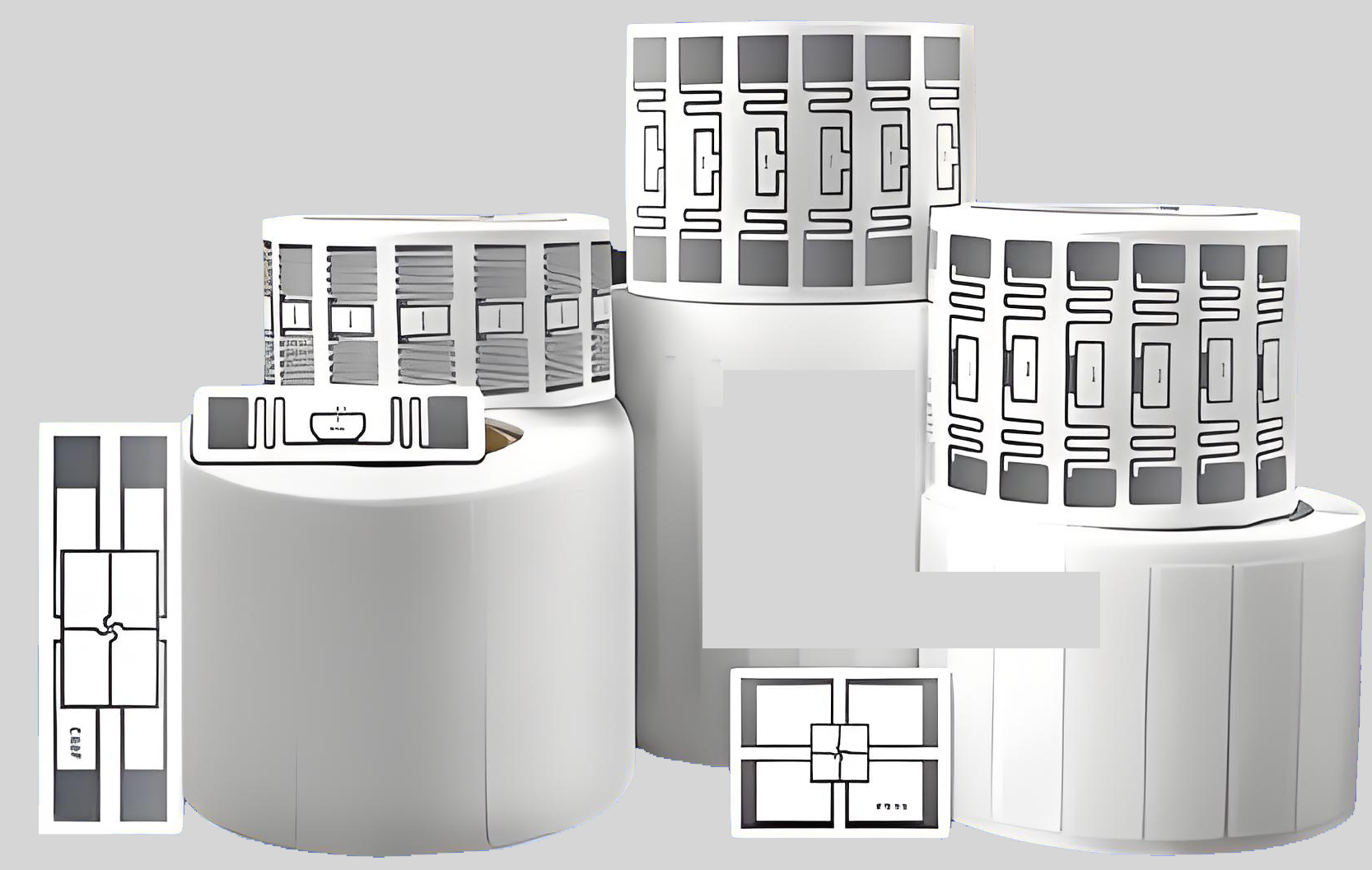
What Is RFID and How Does It Work?
RFID (Radio Frequency Identification) uses electromagnetic fields to automatically identify and track tags attached to objects. Unlike barcode systems that require a direct line of sight, RFID can read multiple tags simultaneously from several meters away—enabling rapid, hands-free data capture. This capability makes it foundational for modern inventory management, with global spending on RFID solutions projected to exceed $17 billion (IDTechEx 2024), reflecting its critical role in boosting operational efficiency.
Core Components: Tags, Readers, and Software
An RFID system is built on a simple, yet powerful, three-part architecture that works together to capture and process data wirelessly.
- Tags: An RFID tag is a small device containing a microchip for storing data and an antenna for transmitting it. The chip holds a unique identifier and other specific information about the object it is attached to—such as an item’s stock-keeping unit (SKU) or maintenance history.
- Readers: The reader—also called an interrogator—uses radio waves to communicate with tags. It sends out a signal that energizes a passive tag or captures a signal from an active one, retrieving stored data without physical contact or line-of-sight.
- Software: Raw data from the reader requires context to become actionable. Middleware filters, normalizes, and translates the stream of tag reads before forwarding it to host systems like enterprise resource planning (ERP) or warehouse management systems (WMS), where it fuels real-time decision-making.
Passive vs. Active RFID Systems Explained
The fundamental difference between RFID systems lies in how the tags are powered—a distinction that directly shapes range, cost, lifespan, and ideal use cases. A passive RFID tag has no internal battery; it draws power from the reader’s electromagnetic field. As a result, it is smaller, more affordable, and virtually maintenance-free. In contrast, an active RFID tag includes its own battery, enabling continuous signal transmission over longer distances—but at higher cost and with finite battery life.
The choice between these technologies is strategic—not technical—and hinges on operational requirements. The table below highlights key distinctions to guide implementation decisions.
| Feature | Passive RFID | Active RFID |
|---|---|---|
| Power Source | Powered by reader signal | Internal battery |
| Read Range | Up to 25 meters | 100+ meters |
| Tag Cost | Low (ideal for high-volume goods) | High (best for high-value assets) |
| Lifespan | Indefinite (no battery to deplete) | Limited by battery life (2–5 years) |
| Primary Use Case | Inventory tracking, retail checkouts | Real-time location of vehicles, medical equipment |
A facility tracking thousands of low-cost items in a warehouse benefits most from the scalability and economy of passive tags. Conversely, a logistics yard monitoring the real-time location of 50 trailers gains greater value from the long-range, persistent signaling of active tags—making the higher per-unit cost justifiable and operationally efficient.
Key RFID Applications Across B2B Industries
Supply Chain Visibility and Inventory Management
RFID transforms inventory management by delivering real-time visibility into the movement of goods across the supply chain. When tags are applied to pallets, cases, or individual SKUs, inventory records update automatically as shipments pass through dock doors—eliminating manual scanning and reducing reliance on error-prone cycle counts. Because RFID readers can scan hundreds of tags per second without line-of-sight, receiving, put-away, and shipping processes accelerate significantly. The result is near-perfect inventory accuracy (95–99%), fewer stockouts and overstocks, lower carrying costs, and faster order fulfillment—all while cutting labor requirements.
Asset Tracking in Manufacturing and Logistics
In manufacturing, RFID tracks returnable containers, tools, and high-value equipment as they move across production lines and storage areas. Active RFID paired with real-time location systems (RTLS) delivers precise, continuous location data—reducing time spent searching for assets by up to 60% (IDplate, n.d.). This visibility improves utilization rates, prevents loss, and supports predictive maintenance scheduling. In logistics, RFID-enabled yard management allows instant identification and status updates for trailers and containers—cutting detention times, accelerating yard checks, and lowering capital spend on replacement assets.
Retail Backroom Automation and Loss Prevention
Retailers deploy RFID to automate backroom inventory reconciliation and accelerate shelf replenishment. Handheld or fixed readers scan entire racks or cartons in seconds—ensuring accurate stock levels and minimizing out-of-stocks. This eliminates manual cycle counts and frees staff for customer-facing tasks. For loss prevention, RFID-enabled exit gates detect unpaid merchandise and trigger alerts in real time. More importantly, granular movement tracking helps identify patterns associated with internal theft—leading to measurable reductions in shrinkage and improved sales performance.
Measurable Business Benefits of RFID Adoption
RFID delivers quantifiable improvements across core operational metrics—directly impacting inventory accuracy, labor costs, asset utilization, and service levels. Industry research consistently validates its impact:
| Benefit | Measurable Impact | Supporting Research |
|---|---|---|
| Inventory Accuracy | 95–99% accuracy, eliminating manual counting errors | SML, n.d.; Datascan, n.d. |
| Cost Reduction | Labor cost savings of up to 30%; positive ROI within 18 months for phased deployments | Hijazin & Zhang, 2019; Sharma et al., 2022 |
| Inventory Discrepancy Reduction | Near-elimination of gaps between recorded and actual stock | Ustundag & Tanyas, 2009; Delaunay et al., 2007 |
| Operational Efficiency | Major time savings in manual counting and item location, enabling staff redeployment | IDplate, n.d. |
These outcomes translate directly into business value: companies report a 25% reduction in inventory carrying costs and a 20% improvement in order fulfillment speed (Hijazin & Zhang, 2019). Enhanced visibility reduces both stockouts and overstocks—improving customer satisfaction—while automatic data capture minimizes human error, a leading cause of operational discrepancies. For B2B operations, this combination drives rapid ROI and builds a more agile, resilient supply chain.
Critical Implementation Considerations for B2B Teams
Integration with ERP and WMS Platforms
RFID’s full value depends on seamless integration with existing enterprise systems—particularly ERP and WMS platforms. Without robust middleware and API-based connectivity, real-time visibility breaks down, forcing teams to reconcile data manually and creating silos that undermine decision-making. A 2023 survey by a leading supply chain institute found that 68% of organizations experienced delays due to incompatible middleware. To avoid this, B2B teams should prioritize interoperable architectures, open APIs, and vendor-agnostic integration frameworks. Partnering with experienced system integrators—and conducting thorough compatibility testing—significantly reduces deployment risk. Phased rollouts also allow teams to validate data integrity and system responsiveness before scaling across facilities.
ROI Assessment and Scalability Planning
Quantifying RFID’s return requires a total-cost-of-ownership analysis—not just hardware and tags, but software licensing, middleware, integration, training, and ongoing support. A pilot-first approach—starting in a high-impact area such as inbound receiving or high-shrinkage inventory—enables organizations to measure labor savings, error reduction, and accuracy gains before committing to enterprise-wide deployment. According to a 2022 industry analysis, companies using this model achieved payback periods under 18 months. Equally important is aligning people and process: updating SOPs, reskilling staff, and establishing KPI dashboards ensure the technology delivers sustained value. Regular review of performance metrics—and flexibility to adapt the solution architecture—keeps ROI on track as business needs evolve.
FAQs
-
What is the primary difference between passive and active RFID tags?
Passive RFID tags draw power from the reader’s signal, while active tags have their own internal battery, enabling longer ranges but with higher costs.
-
How does RFID improve inventory management?
RFID automates inventory tracking by scanning multiple tags simultaneously without requiring line-of-sight, leading to greater accuracy and faster processes.
-
Why is system integration important for RFID?
Integration ensures RFID data flows seamlessly into enterprise systems like ERP and WMS, enabling real-time decision-making and avoiding silos.
-
What are the potential use cases for RFID in logistics?
RFID can track containers, trailers, and pallets, provide yard visibility, reduce detention times, and enhance operational efficiency.
-
How can businesses assess RFID ROI?
A pilot-first approach in strategic areas like inbound receiving helps calculate ROI based on cost savings, accuracy gains, and operational efficiency improvements.