
 EN
EN
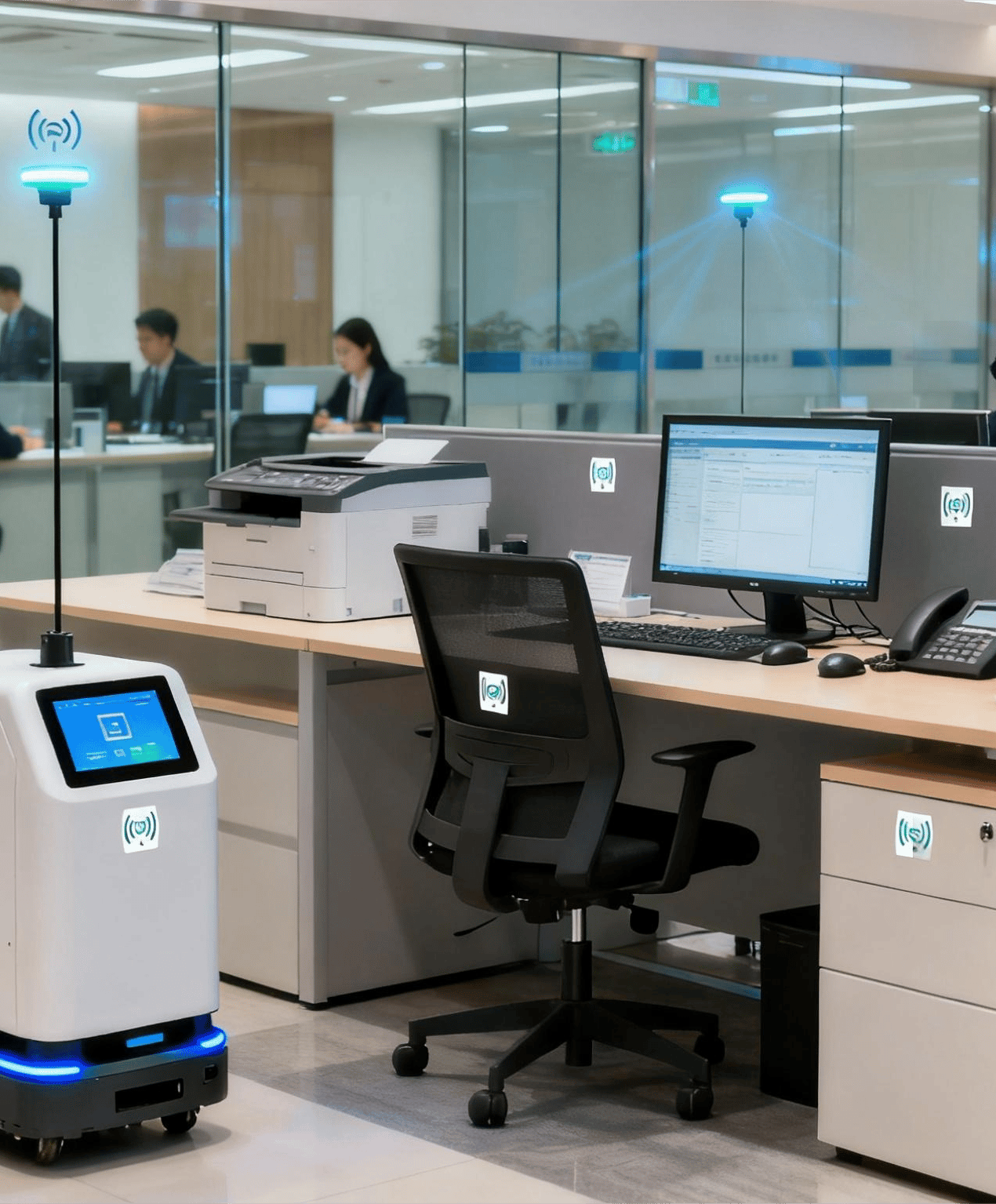
Real-Time Asset Visibility and Tracking with RFID
The Cost of Manual Tracking: 15–30% Asset Misplacement Rates
Manual asset tracking—relying on spreadsheets, paper logs, and periodic audits—creates persistent operational blind spots. Research from the Ponemon Institute (2023) shows organizations misplace 15–30% of critical assets annually due to human error and process fragmentation, costing enterprises an average of $740k in replacement spending and lost productivity. Staff routinely waste hours searching for equipment instead of performing core duties, while financial audits suffer from outdated or inconsistent records—and maintenance schedules slip without accurate location or usage data.
How UHF RFID Enables Scalable, Real-Time Location Awareness
Ultra-High Frequency (UHF) RFID eliminates these gaps by delivering continuous, line-of-sight–free monitoring through strategically placed fixed and mobile readers. Passive UHF tags broadcast unique identifiers up to 12 meters, enabling:
- Simultaneous identification of 200+ assets per second
- Automatic zone-based location updates as items move
- Seamless integration with IoT sensors (e.g., temperature, motion, shock)
This infrastructure scales across single warehouses or multi-site enterprise operations—transforming physical assets into live data points. Maintenance teams receive real-time alerts when tools enter restricted zones; managers visualize utilization patterns via interactive dashboards; and compliance officers access immutable, timestamped movement histories—all from a unified platform.
Case Study: Healthcare Network Cut Equipment Search Time by 78%
A major U.S. healthcare provider struggled with chronic shortages of mobile medical devices—including infusion pumps and wheelchairs—across its 40+ facilities. After deploying UHF RFID tags and reader infrastructure, the organization achieved:
| Metric | Before RFID | After RFID | Improvement |
|---|---|---|---|
| Avg. search time | 43 minutes | 9 minutes | 78% reduction |
| Equipment utilization | 61% | 89% | 46% increase |
| Loss incidents | 17/month | 2/month | 88% decrease |
The system automatically synced device locations with their CMMS, eliminating manual logging and freeing clinical staff for patient care. Annual equipment replacement costs dropped by $320k—demonstrating rapid ROI in high-value, high-turnover asset environments.
Optimizing Asset Utilization and Lifecycle Management
Bridging the Visibility Gap: Why 40% of Assets Remain Underutilized
Industry analysis consistently identifies that nearly 40% of enterprise assets sit idle—not due to lack of need, but because manual tracking obscures actual usage patterns. Without real-time visibility, departments over-purchase replacements while underused equipment gathers dust elsewhere. This inefficiency drains capital: the Ponemon Institute (2023) estimates associated wasted spend reaches $740k annually in mid-to-large organizations. RFID closes this gap by automatically capturing utilization signals—duration, frequency, location, and context—enabling data-driven redeployment before procurement cycles begin.
From Data to Decisions: RFID Analytics + ERP Integration for Predictive Redeployment
Integrating RFID-generated utilization metrics with ERP systems unlocks predictive intelligence. Machine learning models analyze historical usage, maintenance history, and departmental demand forecasts to recommend optimal asset redistribution—before shortages arise. This convergence delivers:
- Proactive redistribution, preventing operational bottlenecks
- Depreciation tracking aligned with actual usage, not calendar time
- Maintenance scheduling triggered by performance thresholds, not arbitrary intervals
The result is a closed-loop lifecycle management system: redundant purchases fall by 35%, asset lifespans extend meaningfully, and capital allocation shifts from reactive replacement to strategic optimization.
Strengthening Compliance and Audit Readiness in Asset Management
Meeting SOX and ISO 55001 Requirements with Immutable RFID Audit Trails
Manual tracking inflates audit risk: the Operational Risk Report (2023) found that 40% of audit time is consumed verifying record accuracy—not evaluating controls. RFID replaces fragmented documentation with tamper-resistant digital trails that automatically log:
- Timestamped geolocation history for every tracked asset
- Maintenance signatures, calibration dates, and certification expirations
- Chain-of-custody events during transfers or deployments
These automated records satisfy SOX internal control requirements and ISO 55001’s mandate for evidence-based decision-making. Real-time alerts flag non-compliant assets—such as overdue calibrations or unauthorized zone entries—reducing regulatory exposure by 57% compared to manual oversight.
Automating CMMS Logging: Eliminating Manual Entry Errors and Delays
When technicians scan RFID tags during service, workflows auto-trigger CMMS updates—eliminating transcription entirely. This shift resolves three persistent pain points:
| Manual Process Risk | RFID Automation Impact |
|---|---|
| 23% data entry error rate | 99.9% accuracy via auto-capture |
| 48-hour log delay | Real-time compliance reporting |
| Version control issues | Centralized, version-stamped audit repository |
By removing human intervention, organizations reduce compliance violations by 68% and cut audit preparation from weeks to hours—turning regulatory adherence from a cost center into a measurable strategic advantage.
Automating Core Asset Management Workflows
Reducing Process Friction: From 5+ Manual Steps to One-Touch RFID Triggers
Traditional asset workflows often involve five or more disjointed steps—physical verification, spreadsheet updates, approval routing, ERP/CMMS entry, and document filing—creating bottlenecks where errors compound and delays cascade. RFID collapses this sequence: as tagged assets pass through gateways or are scanned on-site, inventory reconciliations, location updates, and compliance logging trigger instantly. The result? An 80–90% acceleration in cycle times—and elimination of manual data entry errors that collectively cost organizations $740k annually (Ponemon 2023). Asset tracking evolves from a reactive administrative task to a proactive, integrated business function.
Smart Workflow Activation: NFC-Enabled RFID in Maintenance, Transfer, and Retirement
NFC-enhanced RFID tags add contextual intelligence to critical lifecycle events. Technicians simply tap a smartphone to a tagged asset to instantly:
- Generate work orders pre-populated with full service history and specifications
- Log maintenance actions directly into CMMS
- Trigger part requisitions or calibration alerts
During transfers or retirement, NFC scans automatically revoke system access, initiate depreciation calculations, and launch disposal protocols—all while generating auditable, timestamped records. This seamless synchronization between physical assets and digital systems prevents the lifecycle gaps where, per industry benchmarks, up to 22% of equipment value erodes due to poor tracking discipline.
FAQ
What is RFID, and how does it work?
RFID, or Radio-Frequency Identification, uses radio waves to tag and track objects in real time, providing unique identifiers for each item without requiring a line of sight.
How does RFID improve asset tracking accuracy?
RFID automates the tracking process, reducing human error, providing real-time location updates, and integrating directly with other systems like ERP or CMMS for enhanced accuracy.
What industries benefit most from RFID technology?
Industries such as healthcare, manufacturing, logistics, and retail benefit significantly from RFID due to their high asset turnover and need for real-time visibility.
How does RFID save costs in asset management?
RFID reduces asset misplacement, automates processes, enhances compliance tracking, and prevents over-procurement, collectively saving organizations significant costs.
Can RFID technology integrate with other systems?
Yes, RFID can seamlessly integrate with ERP, CMMS, and IoT systems to enable predictive analytics and streamlined processes.