
 EN
EN
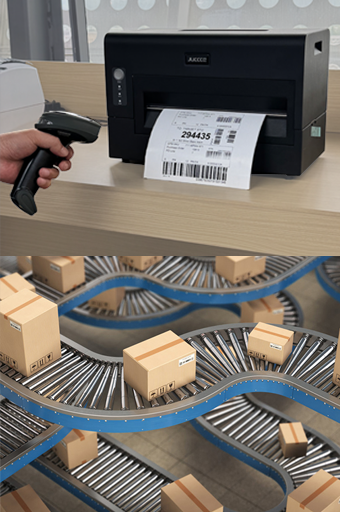
Align Barcode Scanner Type with Workflow Mobility and Task Demands
Handheld, Ring, Fixed-Mount, and Mobile Computer Scanners: Use-Case Fit Analysis
Matching the scanner form factor to the movement pattern of each task is the first step in preventing bottlenecks. A 2023 warehouse technology survey found that 77% of associates use handheld scanners—a choice that has helped cut mispicks by 25% in high-velocity distribution centers. The four primary scanner types each serve a distinct mobility profile:
| Scanner Type | Mobility | Typical Use Case | Key Benefit |
|---|---|---|---|
| Handheld | High (cordless) | Manual picking, receiving, put‑away | Flexibility for dynamic, multi‑location tasks |
| Ring | Very high (hands‑free) | Repetitive order picking, sortation | Continuous operation without setting down the device |
| Fixed‑Mount | None (stationary) | Conveyor, automated sortation lines | High‑speed, hands‑free scanning of moving items |
| Mobile Computer | Very high (integrated) | Inventory management, cycle counting, cross‑dock | All‑in‑one device with screen, apps, and Wi‑Fi connectivity |
Fixed-mount units excel at scanning thousands of items per hour on a belt, while handheld devices are better suited for unpredictable routes. Bluetooth and Wi‑Fi connectivity further influence this choice: a mobile computer enables real‑time WMS updates during cycle counts, whereas a fixed‑mount scanner can be hardwired for zero‑latency data transfer. As the operations team at a leading logistics provider noted, “aligning scanner type with workflow demands, as detailed in this implementation guide for warehouse barcode scanners, ensures maximum ROI.”
Picking Efficiency Drivers: Ring Scanners for Hands-Free Repetitive Scanning
In high-volume picking environments where associates handle hundreds of items per hour, ring scanners eliminate the stop-and-scan motion that slows throughput. Worn on one or two fingers, these devices read barcodes with a natural pinch or trigger gesture—keeping both hands free to grasp, lift, and pack products. Industry data shows they can boost pick rates by up to 30% compared to traditional handheld models, primarily by reducing cycle time per pick. Ring scanners are typically paired with a belt-mounted terminal or wearable computer running the WMS, eliminating the need to carry a separate scanner. This combination also reduces physical strain: a 2023 ergonomic study reported an 18% drop in repetitive-strain complaints in a large e-commerce fulfillment center. For zone or batch picking, ring scanners integrate seamlessly with voice-directed or vision-based systems—creating a fully uninterrupted workflow and measurably reducing walk-and-scan time.
Select Rugged Barcode Scanners Built for Warehouse Environmental Stressors
Warehouse floors challenge barcode scanners daily with dust, moisture, temperature swings, and constant drops. Choosing devices purpose-built to survive these conditions prevents hardware failure, data loss, and workflow interruptions. Two critical specifications determine durability: ingress protection (IP) ratings and military-grade drop resistance.
IP67+ Sealing and Extended Temperature Tolerance (−20°C to 50°C)
An IP67 rating means the scanner is completely dust-tight and can survive immersion in up to one meter of water for 30 minutes. IP68 extends that protection to deeper or longer submersion—essential in wash-down zones or docks exposed to rain and spills. Look for models tested to operate reliably across a −20°C to 50°C range. Such thermal resilience ensures consistent performance in blast freezers, outdoor receiving yards, and loading bays that swing from cold storage to sun-heated docks. Moisture encroachment can fog the scan window or corrode internal components, causing erratic decoding. A sealed industrial-grade housing prevents condensation and dust buildup—eliminating frequent repairs. Devices meeting these standards withstand condensation cycles, steam cleaning, and fine particulate accumulation without degrading scan accuracy. Over time, environmental-sealed scanners reduce replacement costs by as much as 40% compared to unprotected consumer-grade units (VDC Research, 2023).
Drop Resistance (1.5m–3m) and Shock-Absorbing Construction for High-Traffic Zones
Repeated drops onto concrete are the leading cause of scanner failure in busy fulfillment centers. A rugged scanner rated for 1.5- to 3-meter drops survives falls from picking carts, conveyor belts, or average hand height. MIL-STD-810H testing validates its ability to withstand multiple impacts across all axes without cracking the screen or dislodging internal components. Shock-absorbing construction redirects collision energy away from sensitive electronics. Look for a rubberized overmold, reinforced corners, and a magnesium alloy internal frame that flexes slightly on impact. These design choices turn a common drop into a non-event—keeping the scan engine aligned and the display readable. In high-traffic zones where devices are handled continuously, such resilience means fewer repairs and less downtime, delivering lower total cost of ownership and consistent order throughput during peak shifts.
Guarantee Reliable Barcode Decoding Across Real-World Conditions
Warehouse scanning must perform reliably under unpredictable conditions far removed from controlled lab settings. Two critical capabilities ensure every scan is captured accurately and efficiently.
Universal Symbology Support: 1D (UPC, Code 128) and 2D (Data Matrix, QR) Accuracy
A reliable barcode scanner must decode all common 1D and 2D symbologies encountered in warehouse workflows. 1D codes like UPC and Code 128 dominate shipping labels and carton identification, while 2D formats such as Data Matrix and QR codes are increasingly used for serialization, lot tracking, and direct part marking. Inconsistent symbology support leads to scanning failures: research indicates that a single missing symbology can cause up to 8% of items to require manual data entry—slowing throughput and increasing error rates. For example, a warehouse handling both retail goods (UPC) and automotive parts (Data Matrix) needs a scanner that instantly reads both without switching modes. Universal support ensures seamless integration with varied supplier labeling and eliminates the need for multiple devices. Advanced scanners also accurately decode stacked symbologies and composite codes—common in logistics—preventing downtime and preserving inventory accuracy.
Adaptive Illumination and Motion-Tolerant Decoding for Damaged or Low-Contrast Barcodes
Real-world conditions degrade barcode readability. Lab tests often achieve near 99% decode accuracy, but production environments with torn labels, poor lighting, and motion blur can reduce accuracy to 91% or lower. At 1 million scans per day, that 8% drop translates to 90,000 daily failures—each requiring manual re-scanning. Adaptive illumination—using multiple lighting angles and exposure adjustments—overcomes low contrast and reflective surfaces, such as shiny metal DPM (Direct Part Marking) codes. Motion-tolerant decoding combines multiple frames to reconstruct blurred barcodes on fast-moving conveyors. Advanced scanners also handle skewed scans and extreme angles, ensuring reliable reads even when workers are rushed. Without these capabilities, warehouse throughput suffers from constant line stoppages. Selecting a scanner with robust illumination and motion tolerance is essential to maintaining high accuracy under everyday operational stress.
Verify Barcode Scanner Integration Compatibility with WMS and ERP Systems
Ensuring that barcode scanners integrate seamlessly with your Warehouse Management System (WMS) and Enterprise Resource Planning (ERP) software is critical for real-time data accuracy. A scanner that cannot communicate bidirectionally with these platforms creates islands of disconnected information—forcing manual re-entry and increasing the risk of stock discrepancies. To avoid costly delays, confirm that the scanner supports the data exchange protocols used by your WMS and ERP, commonly REST APIs, web services, or dedicated SDKs. Many integration failures stem from overlooked middleware configuration, so early testing in a sandbox environment is essential. A well-integrated scanning solution automatically updates inventory counts, validates order picks, and enforces lot-tracking rules the moment a barcode is read—turning every scan into an audit-ready transaction. This level of connectivity not only eliminates latency but also enables advanced features like cross-system alerts and dynamic re-routing, ultimately preserving the ROI of both your scanning hardware and your enterprise software stack.
FAQ Section
Q1: What are the different types of barcode scanners, and how do they fit various workflows?
A1: The main types are handheld, ring, fixed-mount, and mobile computer scanners. Handheld models are versatile for manual picking tasks, ring scanners are ideal for repetitive order picking, fixed-mount units excel in high-speed automation environments, and mobile computer scanners combine scanning with integrated inventory management features.
Q2: Why are rugged barcode scanners important for warehouses?
A2: Rugged scanners are built to withstand environmental stressors such as dust, moisture, temperature fluctuations, and drops. These characteristics ensure long-term durability, reduce replacement costs, and prevent workflow interruptions.
Q3: How can barcode scanners improve picking efficiency?
A3: Devices like ring scanners allow hands-free operation and eliminate the need for stop-and-scan motions, which speeds up pick rates by up to 30%. They also pair seamlessly with wearable computers for uninterrupted workflows.
Q4: What capabilities ensure reliable scanning performance in warehouses?
A4: Reliable scanning requires universal symbology support (1D & 2D), adaptive illumination for low-contrast or damaged barcodes, and motion-tolerant decoding to handle fast-moving items effectively.
Q5: How should barcode scanners integrate with WMS or ERP systems?
A5: Barcode scanners must support the specific protocols of your WMS/ERP, such as REST APIs or web services, ensuring seamless real-time data updates. Early sandbox testing helps confirm compatibility and minimizes configuration errors.